Know before you go: River cruise answers from our Emerald Budapest to Amsterdam trip
We spent 15 days on the Emerald Sun sailing from Budapest to Amsterdam in May 2026 – and before we left, we spent a lot of time trying to find real answers to basic questions.
How do excursion reservations actually work? What’s the WiFi situation? Will we feel locked into a group the entire time, or is there room to explore on our own?
The official Emerald website answered some things. Forums and travel blogs filled in a little more. But a lot of what we wanted to know, we only found out once we were on board.
In this post, we’re sharing answers to the questions we had trouble finding before we went – written from 15 days of detailed notes and honest observation aboard the Emerald Sun.
A few caveats before we go further… Some of what we share here may apply to other Emerald itineraries or similar lines like Viking, Avalon, or AMA Waterways. But our experience is specific to this ship, this route, and this sailing so “your miles may vary”.
👉 We kept detailed notes from Budapest to Amsterdam:
– docking locations
– daily schedules
– menu photos
– details about the included tours
– WiFi speed tests along the route
Download our free port-by-port guide and Google Map list here to help plan your time at each port and get a better idea of what to expect.
Table of Contents
Video: What first time river cruisers want to know
Our Emerald river cruise quick facts
- 🗺️ Route: Budapest to Amsterdam
- 🗓️ Timing: 15 days in early May 2026
- 🚢 Ship: Emerald Sun
Logistics & Pre-Cruise Planning
When do you actually find out the Emerald excursion schedule?
About five weeks before departure, Emerald emailed us a My Journey PDF with our personal transfer times and a day-by-day itinerary overview.
It listed which excursions were offered on each day and flagged which ones cost extra. What it did not include: specific times, tour details, or anything that would let you plan much in advance.
That gap is intentional. The schedule on a river cruise can shift at the last minute based on river conditions, docking changes, or passenger count.
The real scheduling happens on board, every evening, at the cruise director’s port talk. That’s when you find out what’s happening tomorrow – and when you can sign up for anything with limited spots.
We grew to appreciate taking each day as it came and being more relaxed about pre-planning on the cruise.
That said, we did keep detailed notes throughout the sailing for folks who just want a little more idea of what the day-to-day could look like. Those details are in our free port guide here.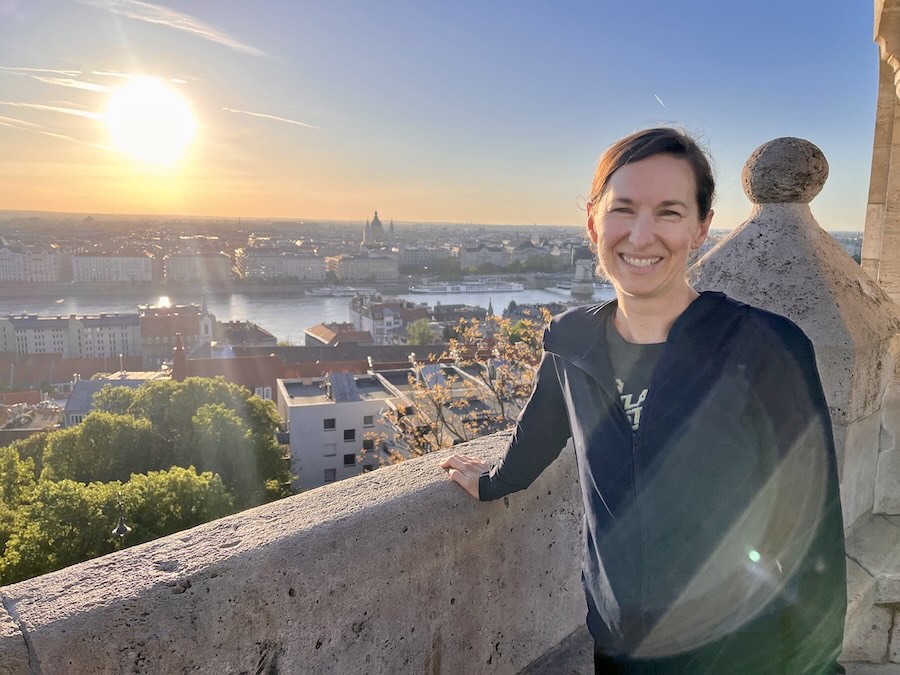
How early should we arrive at the starting city (Budapest)?
Emerald’s documentation said to arrive by 5pm on Day 1. Everyone in our group flew in at least one day early, and we’d recommend the same if you’re coming from the States or other continents.
The time zone adjustment alone is worth an extra day. We also enjoyed exploring more of Budapest.
If you can’t manage an earlier arrival, however, the ship didn’t leave Budapest until the afternoon of Day 2, so there’s buffer time in case something goes sideways with a flight.
Tip: you’ll also want to confirm the exact docking location with Emerald about 24 hours before the cruise starts. We emailed the ship directly (the ship’s email address and phone number had been emailed to us) and received the docking address and a map link on the day before our cruise.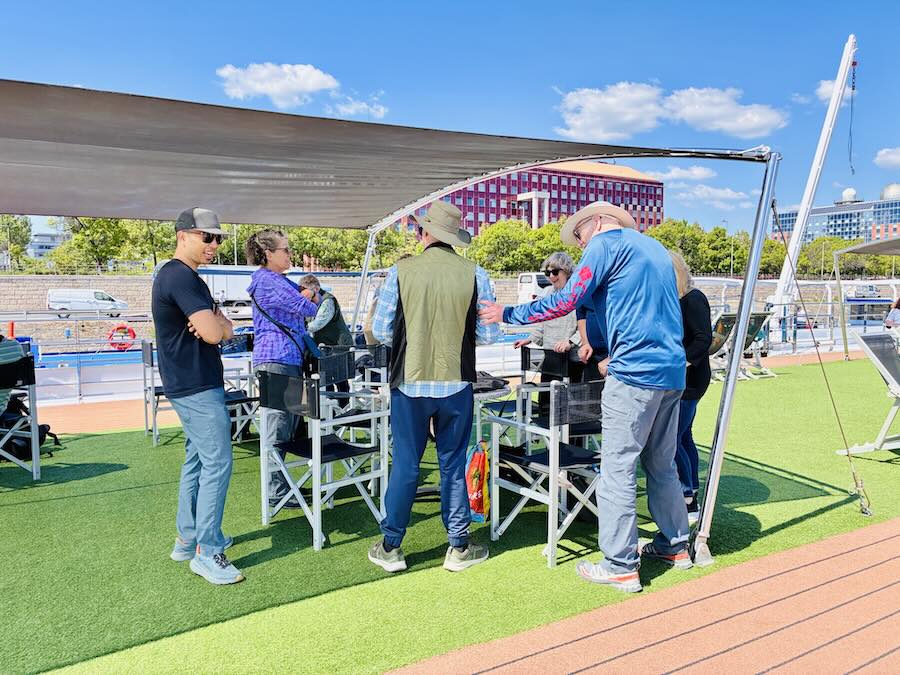
How does luggage work on arrival day?
You can potentially drop your bags as early as 10am (after the previous sailing’s passengers have finished breakfast and vacated their rooms), and rooms are typically ready around 3pm. Ours was ready closer to 1pm.
What we didn’t know in advance: Emerald had an unadvertised light lunch buffet running from noon to 3pm in the bar – salads, sandwiches, soup, dessert, drinks.
So there was no reason to rush off the ship once we arrived. We dropped our luggage with the staff outside the ship, found a spot on the sun deck, had lunch, and relaxed until the rooms were ready.
Tip: Keep luggage tags with your name on your bags. This way, the crew can deliver them straight to your room when it’s ready.
How do we find out where the ship docks each day?
The docking location for each port is posted in the lobby and on your TV screens by the evening before arrival – whether as a confirmed address or an general area while the specific dock number is still being finalized.
In our experience, the location rarely changed after being posted. However, the short notice does mean that arranging your own private guide or transit for a specific port can be tricky.
For general reference (not guaranteed to be the same), our free port guide includes the docking locations used on our voyage.
What if low water or high water disrupts the itinerary?
This is more common on river cruises than first-timers expect, and it’s worth knowing how Emerald handles it.
When the river becomes impassable, they provide the best equivalent experience available – whether that’s traveling by coach, overnighting in a hotel, or transferring to another ship.
In our case, we hit a low water situation near Passau, which is apparently a common problem spot. We heard from passengers of other ships that they were be re-routed by coach or hotel.
Emerald handled it by emptying the pool to reduce the ship’s weight (about 30,000 kg), adjusting our docking location in Passau, and shifting the port visit by a couple of hours. We were provided clear updates from the Cruise Director as we got closer to Passau.
We were told we might hear debris kicked up from the bottom of the river, but the ship was never in danger of grounding. The whole thing was managed well, so most passengers barely noticed. We slept perfectly soundly that night on the bottom deck.
How do airport transfers and disembarkation work on the last day?
The Cruise Director walked us through the logistics of disembarkation and airport/train transfers clearly a couple day before the end of the cruise. We were asked to reconfirm our departure plans and then a list of transfer groups was posted at the director’s desk.
The latest you need to vacate your room is 8:30am on the last day. Also settle any remaining charges at reception before 8:30am. But you can continue using the ship’s facilities – including lunch and drinks – after checking out. You can also come and go from the ship while you wait for your transfer.
Color-coded luggage tags were delivered to our room the night before departure. We were asked to set our bags outside our door at least 45 minutes before our transfer time, then wait in the lounge for a PA announcement.
Pastries were set out in the lounge at 6am for early risers, and a to-go box was apparently available for anyone leaving before the dining room opened. I don’t think anyone in our group took advantage of breakfast, as most of us left by 6:30am.
The crew loaded luggage out to the coach at the appropriate time, then we followed. Their system was to raise all suitcase handles and then each passengers pulls their own handle down to confirm the bag is yours before entering the transfer bus.
One note on the airport transfer: an Emerald representative was supposed to meet our group at Amsterdam Airport to help with check-in. No one was there when we arrived, so half our group waited and the rest of us proceeded to the terminal on our own.
With light morning traffic, the airport transfer took about 20 minutes from the dock. The train station was only a 12 minute walk so I imagine the shuttle transfer to Amsterdam Centraal would be very quick as well.
The ship experience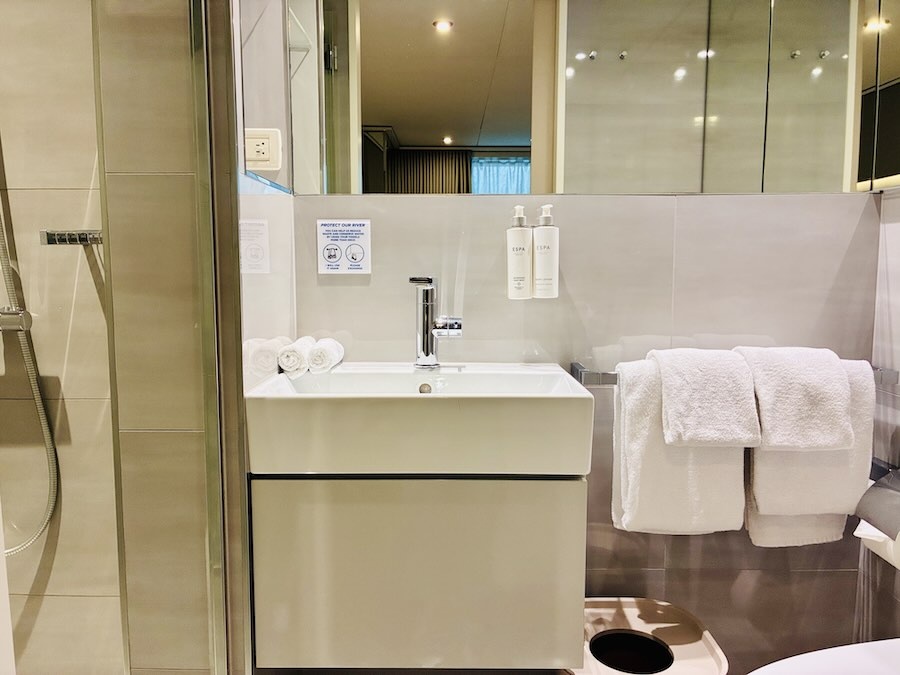

What are the rooms actually like? Balcony vs. lower cabin?
For a detailed look at the cabin layout, what’s included in your fare, and how a typical day flows on board, we’d point you to Emerald’s website and our video above, where Jedd and I walk through our honest impressions.
What we’ll add here: the rooms felt unexpectedly spacious compared to ocean cruises.
We were on a lower deck with fixed windows, and we had assumed that came with smaller cabins. Instead, the layout was the same as the balcony-level rooms above – the difference is simply the view.
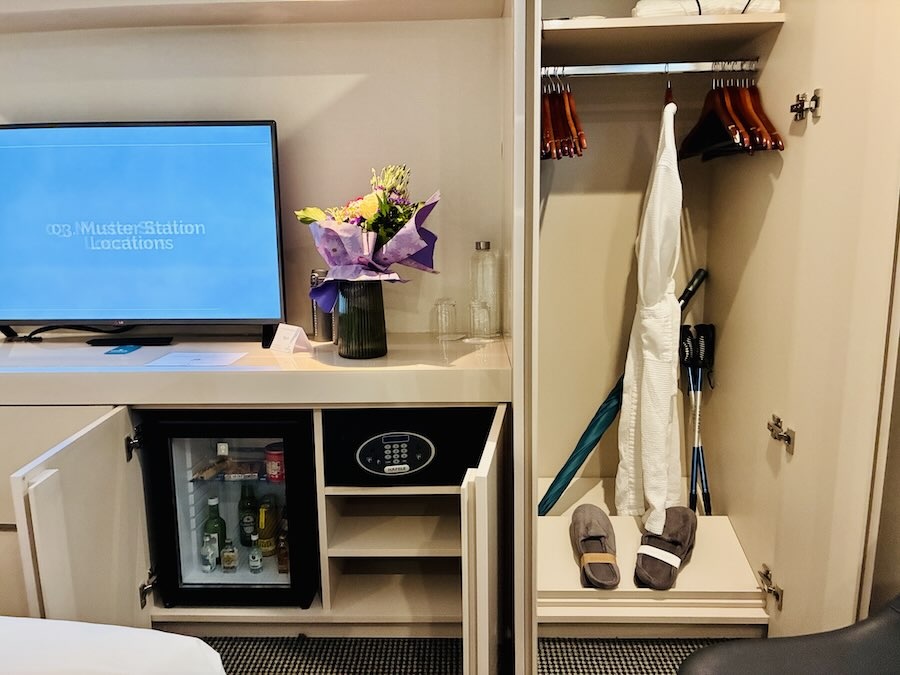
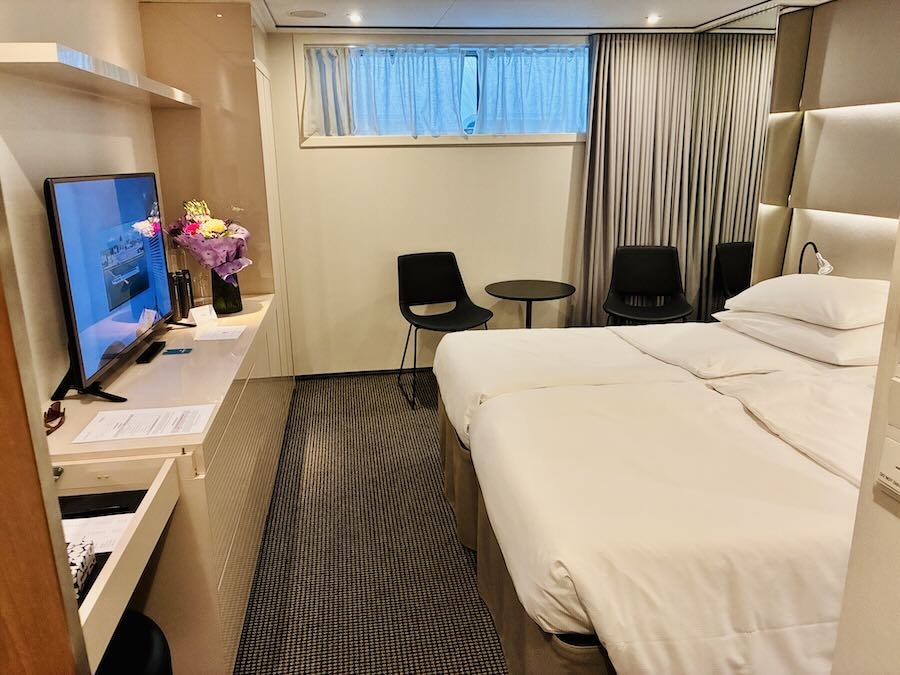
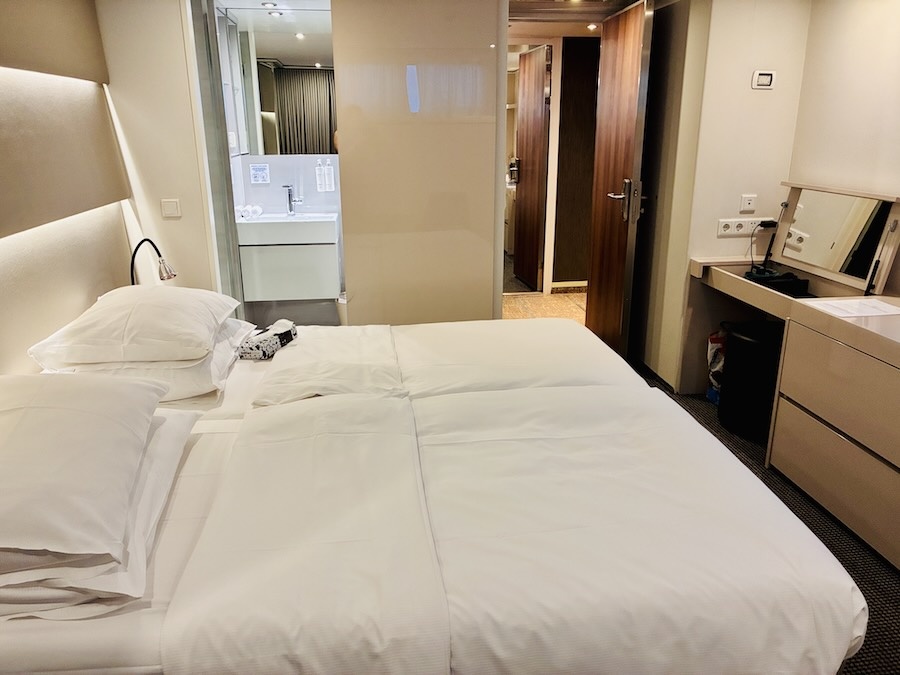
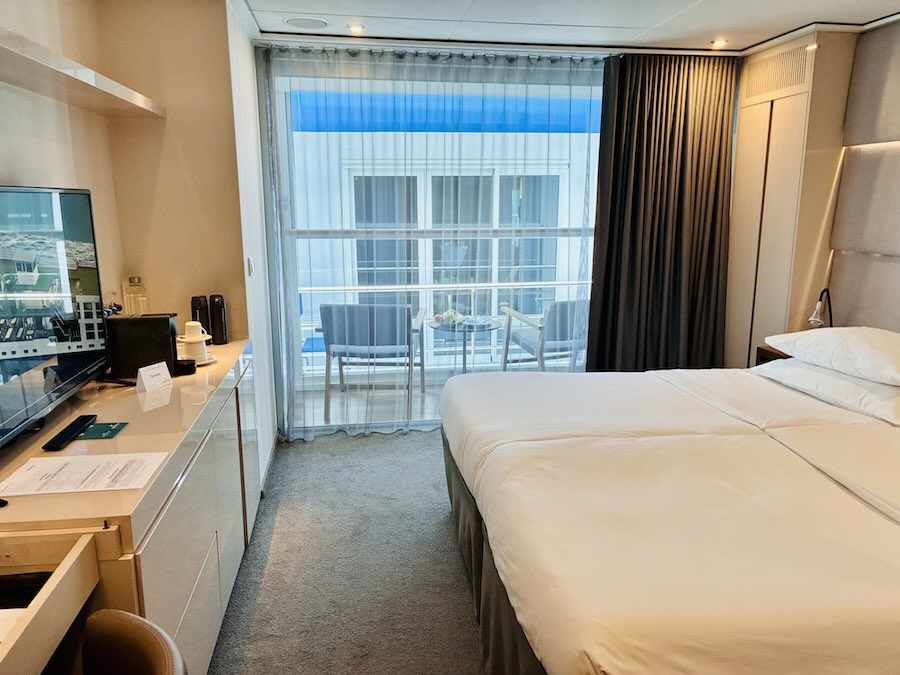
If you’re considering a lower deck to save on cost, know that you’re not giving up much in terms of the room itself.
Are wine and beer really included at meals?
Yes. Wine and beer (and sodas) are available at both lunch and dinner, with no limit on pours.
The selections rotate daily based on what the Maître D has chosen, one red and one white – typically wines that pair with the region you’re sailing through. Alcohol-free wine and beer were also available.
Cocktails, spirits, and anything beyond the included selections at meals are an additional charge.
How do meals work? Is there coffee or food available between meals?
Yes! Coffee, tea, and a cookie of the day are available 24/7 in the lounge.
Coffee and tea is also always available by the pool on deck 3. The machine at the lounge had the most options, including hot chocolate, latte macchiato, and the choice of espresso, crema, or decaf for each drink.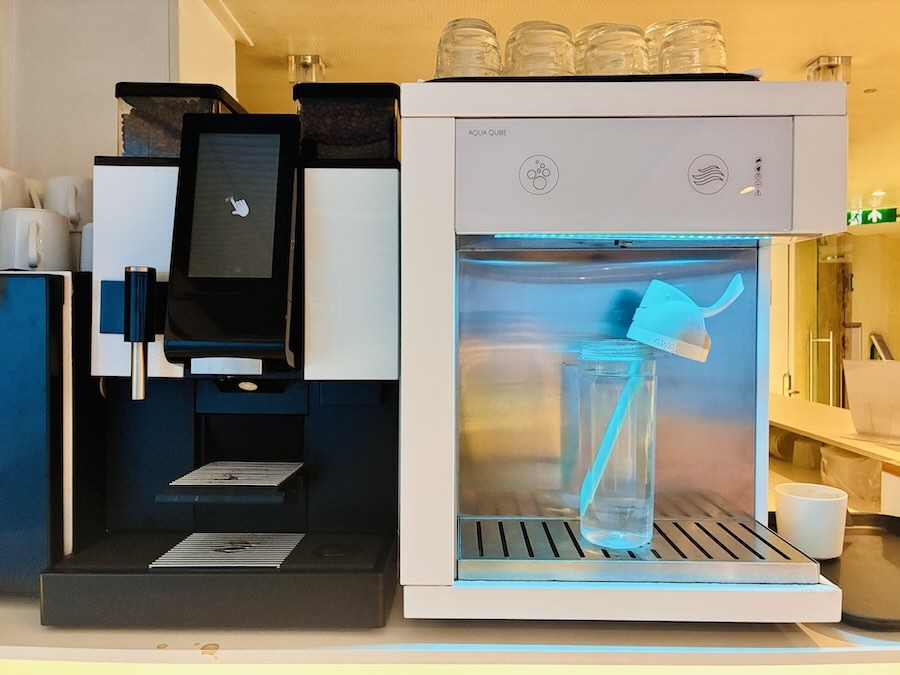
Breakfast is buffet style in the dining room for 90 minutes. Lunch is also in the dining room with both buffet options and a small daily a la carte menu.
Early risers can find pastries set out in the lounge bar one hour before breakfast starts. A few late breakfast items are also available there an after the dining room closes for breakfast.
Times for breakfast and lunch vary slightly based on the day’s activities but typically start around 7:30am and 12:30pm.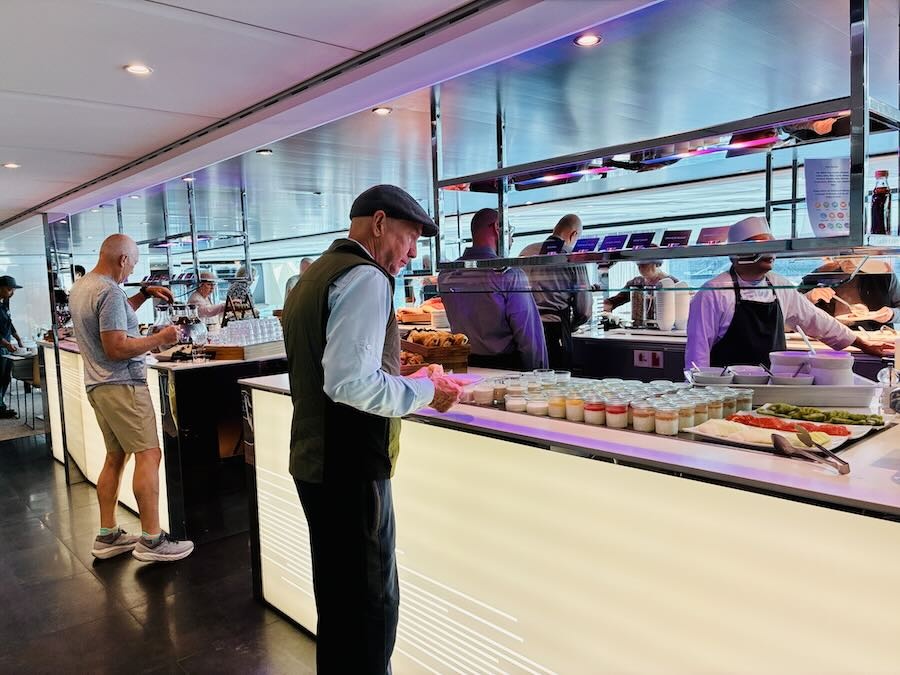
A lighter lunch option is served in the lounge (the same salads, sandwich, and soup as they serve in the dining room).
Afternoon tea time fills the gap before dinner, where they set out small sandwiches and desserts at the bar from 4:00-4:30pm.
Dinner is always in the dining room, most often starting at 7pm. Everyone orders at once, and 3 courses are served along with wine.
There is no assigned seating, so everyone finds a spot after the port talk. Tables are mostly grouped in two’s, four’s, and six’s.
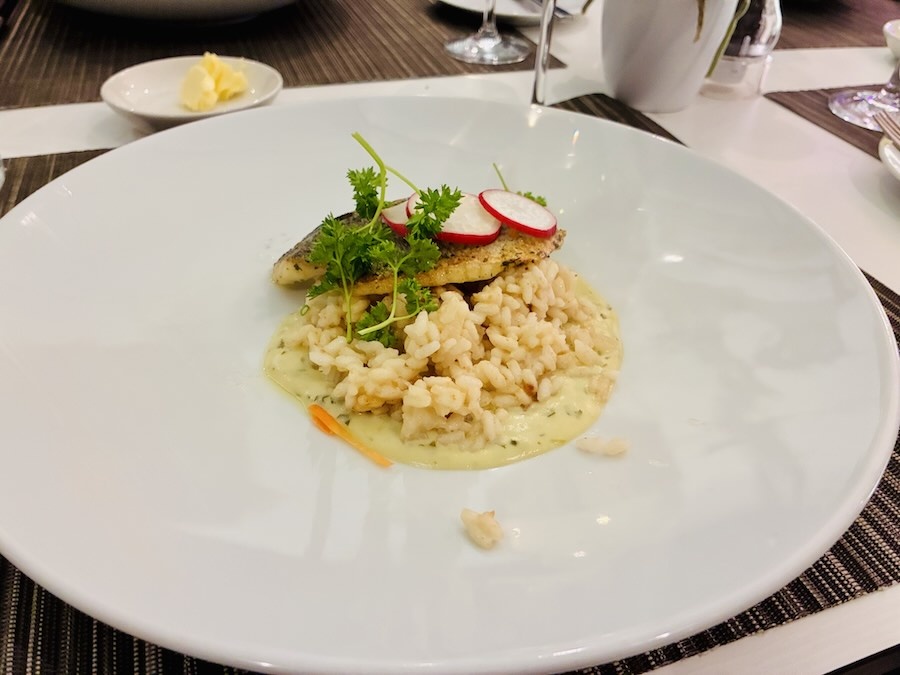
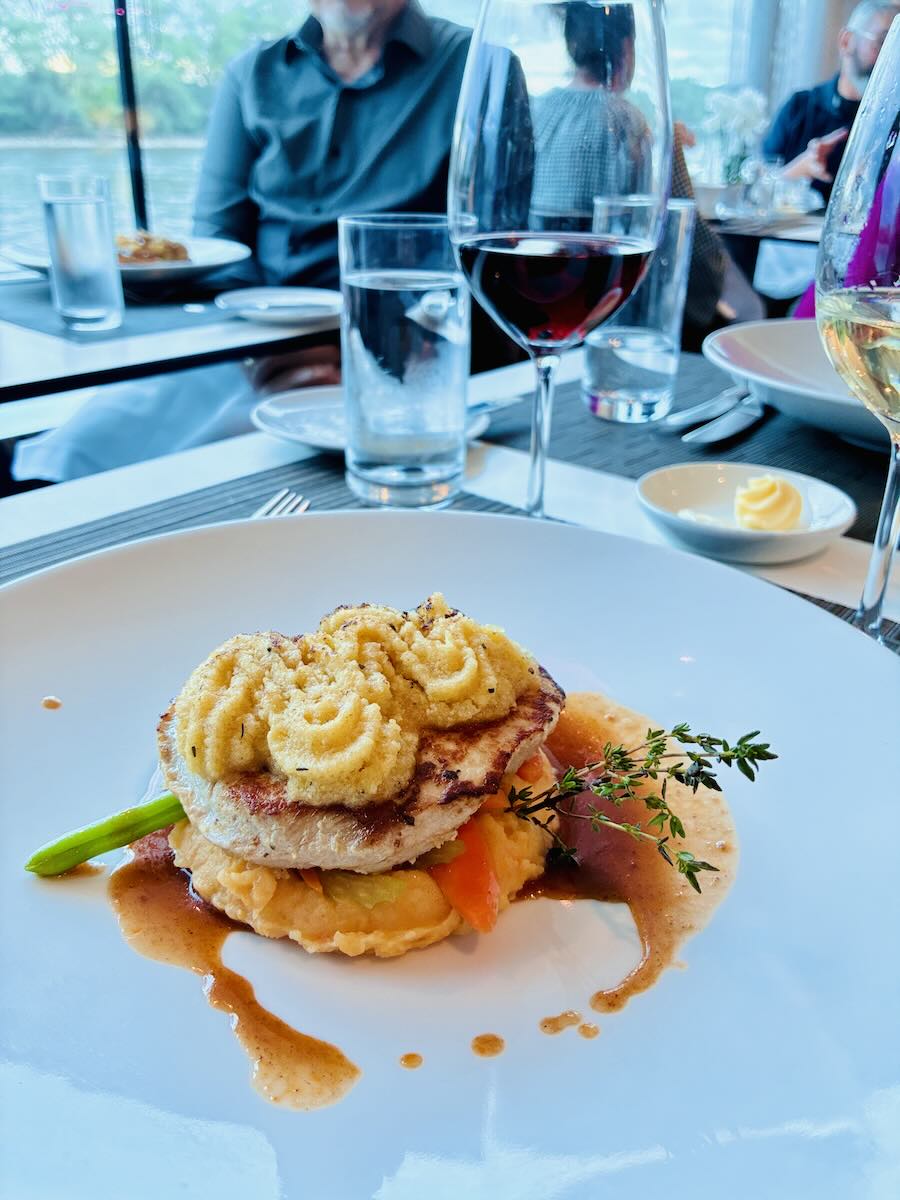
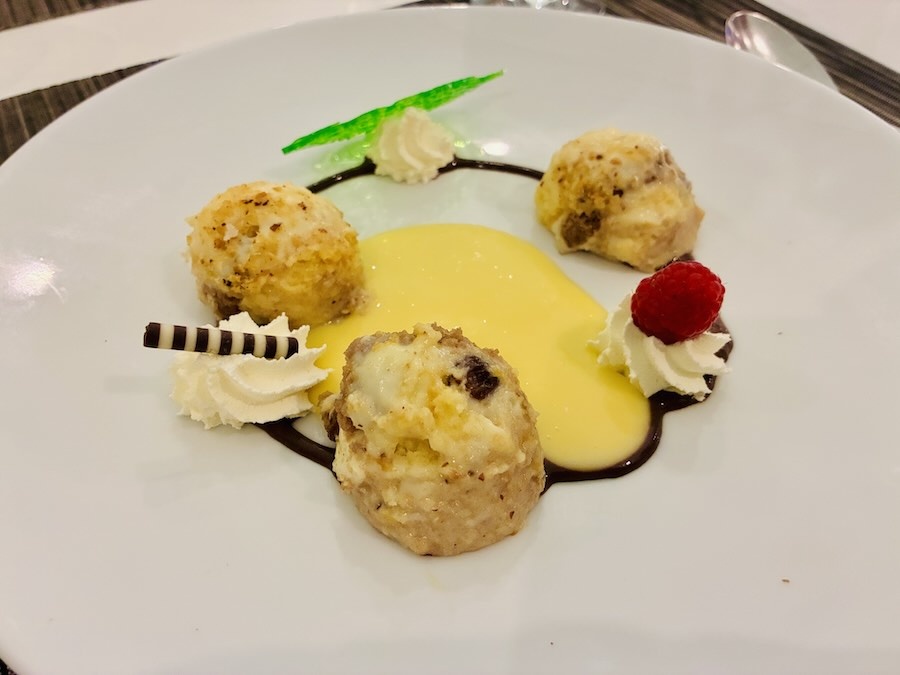
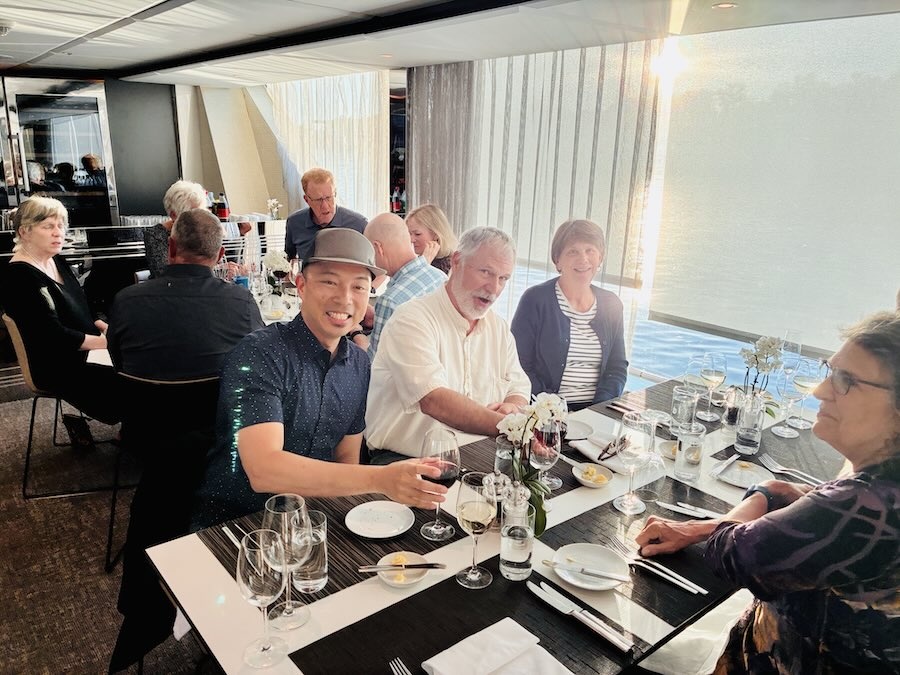
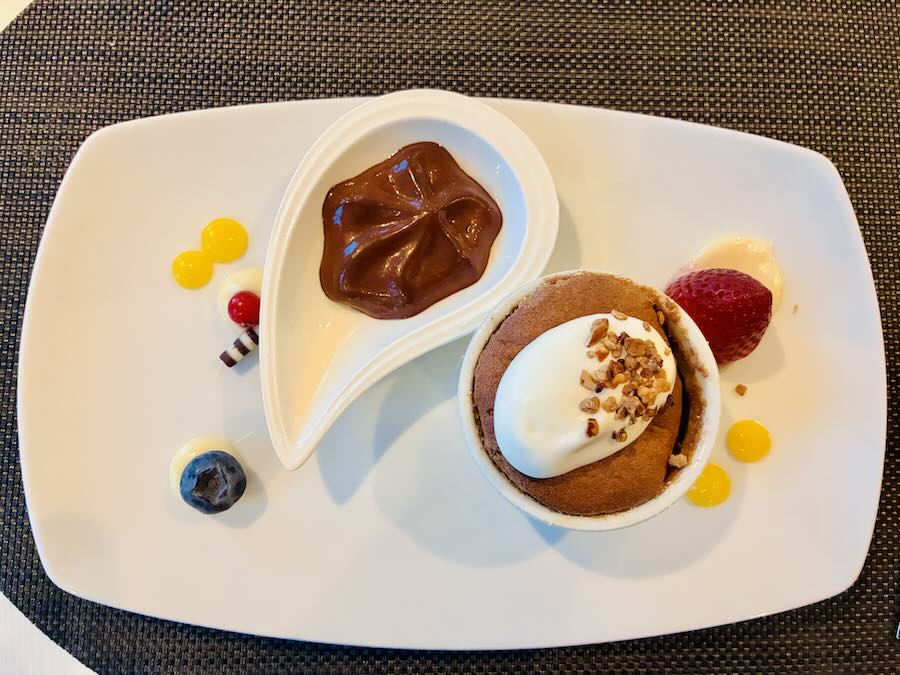
📷 To see lots of sample menus, sign up to get our free port-by-port guide.
How does laundry work?
Laundry on this particular voyage is only available on a pay-per-piece basis, with a pricing sheet provided in the room on the first day.
Only passengers in top-level staterooms receive some complimentary pieces of laundry.
Hand-washing a few items in the sink was easy. There is a clothes line in the shower, which dried surprisingly well. Some passengers also used the provided hiking stick to hang clothes over the closet doors, which is just below a vent.
Do we need to tip the crew separately?
No. Gratuities for the crew and tour guides are prepaid as part of your fare. It helps the financial side of the cruise feel genuinely uncomplicated once you’re on the ship.
What if someone in our group has dietary restrictions or medical equipment needs?
Emerald handles this proactively and asks you tell them about any conditions in your Trip Personnaliser before the voyage.
One person in our group had a gluten intolerance, and the kitchen arranged a meeting with her in on day one to go over her needs specifically.
Passengers traveling with CPAP machines received similar attention. Emerald set expectations clearly and followed up. 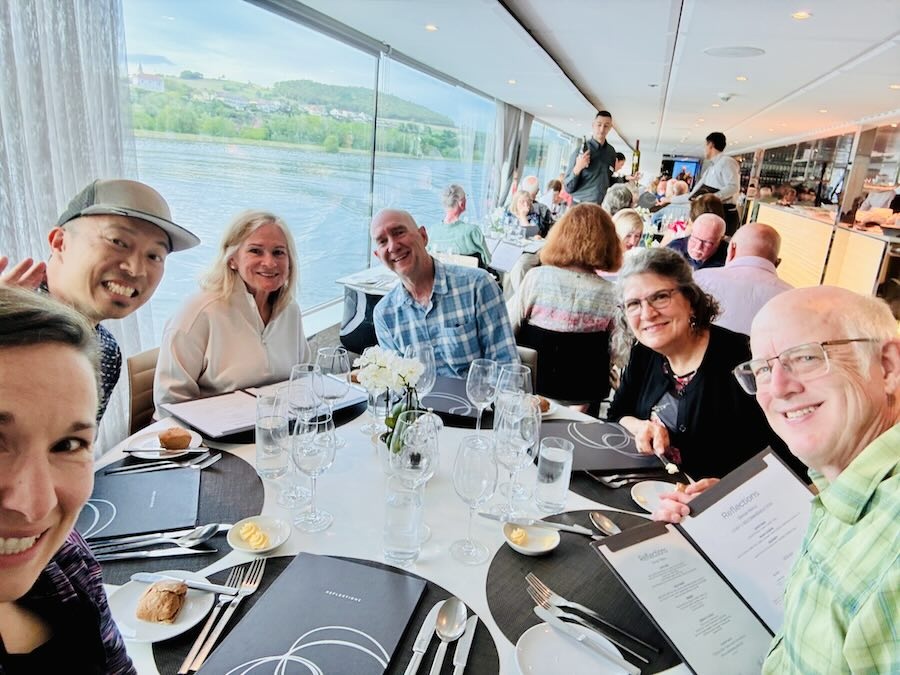
How crowded does the ship feel? Are there quiet spaces on the ship?
There are only two times a day when the ship felt crowded because everyone gathers in one room.
One: The port talks happen every night and are held in the lounge where most passengers gather, so the seats fill up there.
Two: Dinners are served all at once in the dining room, and the conversation volume gets quite high. For some people that’s part of the fun.
As an introvert, shouting for dinner conversation was a lot at the end of a full day. I suppose it’s a necessary trade-off for the value of the cruise experience overall, but it was one of the few aspects I really wish could change.
The sun deck, the lounge, the outdoor area in front of the lounge, and the area by the pool often offer real breathing room. If you need quiet time on board, you can find it most of the day – or you can cozy up in your own cabin.
How Emerald excursions actually work
What’s the difference between Included, EmeraldPLUS, EmeraldACTIVE, and DiscoverMORE?
We didn’t fully understand this until the Cruise Director explained it on board, so here’s a clear breakdown:
- Included excursions, like the guided walking tours at each port, are available to all passengers at no extra cost. No is sign-up required – you simply show up or opt out. There’s usually a gentle-walker group offered on each tour as well.
- EmeraldPLUS activities are also included and need no sign-up. These tend to be cultural experiences – home visits or musical performances on board.
- EmeraldACTIVE options have no additional cost but they involve more physical activity (hikes, bike tours) and have limited spots. Sign-up is required and some of these filled quickly on our voyage.
- DiscoverMORE excursions are paid add-ons with limited capacity. Some require a minimum number of participants to run.
How do we reserve the excursions we want?
For included tours and EmeraldPLUS: just show up. No sign up needed.
For EmeraldACTIVE and DiscoverMORE: most are reserved on the ship.
The cruise director gives an overview of the full sailing’s options on the first full day at sea. From that point, some activities open for sign-up right away – especially anything with limited capacity like bike tours. Others open the night beforehand, during that evening’s port talk.
Tip: send someone directly to the sign-up sheet at the director’s desk as soon as a list opens for anything you really want. Bike tours in particular filled immediately on our sailing.
Wait lists are worth adding your name to, as spots opened up more than once.
If there’s a specific paid excursion you know you want before the cruise, ask your travel agent or contact Emerald directly about pre-booking options.
📷 We included photos of the DiscoverMORE pricelist from our cruise in our free port-by-port guide.
Are the active excursions actually strenuous?
Nothing requires pro-level fitness.
The hike to Dürnstein Castle started at a pace that had four people turning back in the first few minutes. The Dürnstein to Melk bike tour covered significant distance with a guide setting the pace, but both were manageable by active seniors and folks with a modest level of fitness.
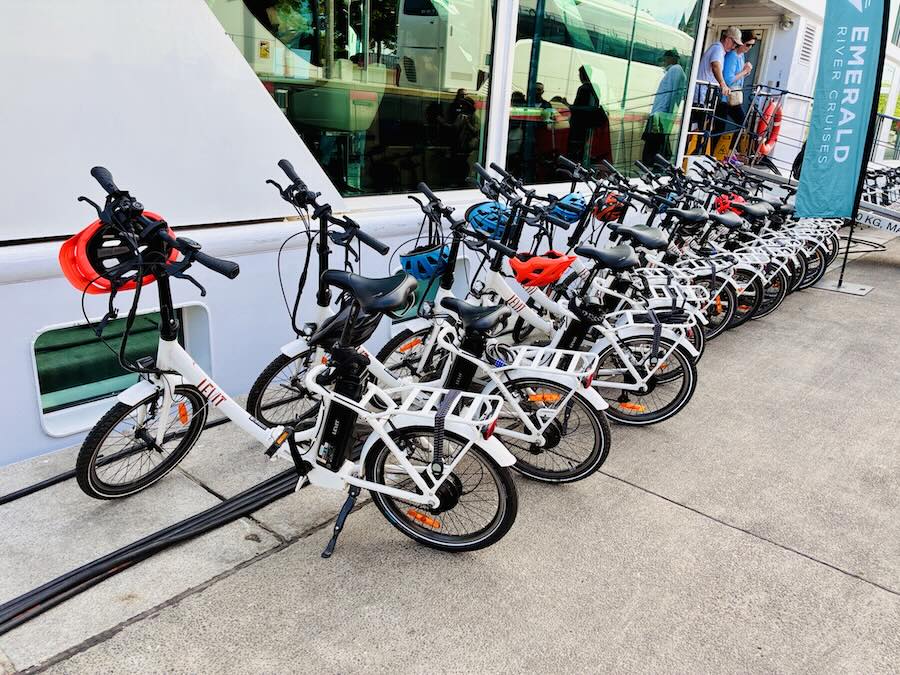
The bike tours use e-bikes so as long as you’re comfortable riding a bicycle, it’s not hard to keep up.
That said, most of the included walking tours accommodate a range of physical abilities, and there’s almost always a gentle-walker group that moves at a slower pace and skips the steeper sections.
We share our honest ratings and observations on every excursion in this post.
Can we skip excursions and explore on our own?
Absolutely. The ship is essentially a traveling hotel, and you’re free to make your own day at most ports (with one exception).
The main constraint is transportation. At ports where the ship docks close to town, this is easy.
At ports that require a coach transfer, you’ll need to plan around the ship’s return schedule if you want a ride back, or arrange your own transport.
How do the onboard bikes work?
The ship kept about a dozen e-bikes on board (more were ordered for our Dürnstein to Melk bike tour). Request them at reception – there’s no charge.
At some ports, the e-bikes are set out near the ship exit and the cruise director’s desk sometimes had a suggested route map.
Jedd took out an e-bike a couple times for afternoon free time at ports where the ship stayed docked for several hours.
Do we need coins for bathrooms during excursions?
Sometimes. It wasn’t consistent across the trip – some locations had free facilities, others required coins (up to 1 euro).
You might want to carry a few small coins just in case, although I never needed it.

Staying connected across six countries
The short version: the ship’s WiFi was workable for email, maps, and even streaming at certain times – but it wasn’t consistent.
If we went through a lock, it often cut out. Some stretches of the river had no signal at all.
We ran speed tests at nearly every port along the route, in case anyone is concerned about working remotely. You’ll find those details in our free port report.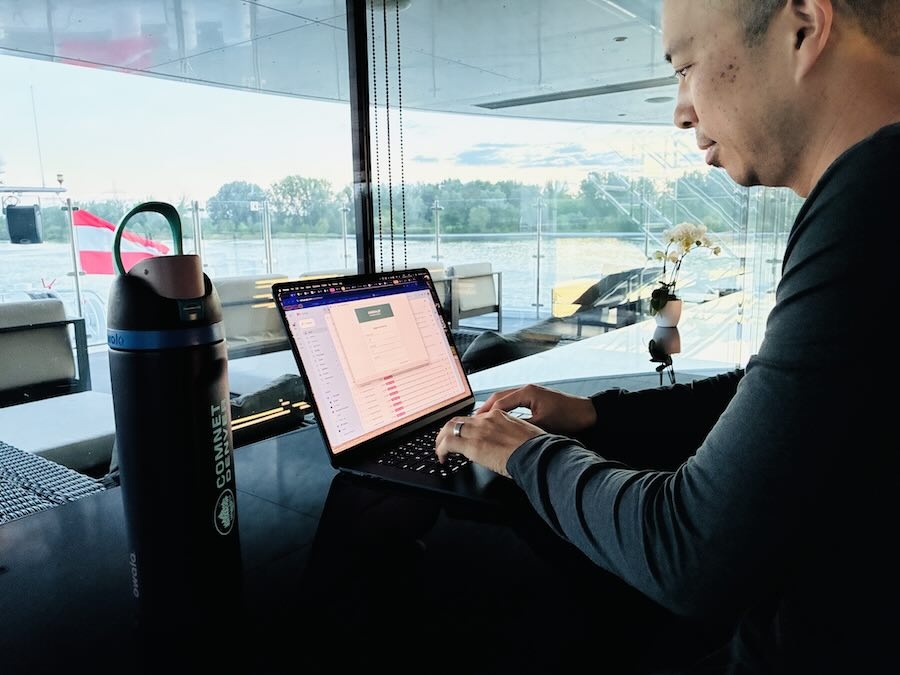
An eSIM helped fill the WiFi gaps, but it had similar dead zone issues in some spots. Neither was a perfect solution on a ship moving through multiple countries over two weeks.
We tested Saily as our eSIM provider on this trip and found it to be reliable when coverage was available.
That said, we recommend eSIMs for international travel in general – not just for this cruise. Having a local data option that doesn’t depend on the ship’s connection is worth it, especially if you want to explore outside of the guided tours.
We go much deeper on all of this in our connectivity post – including the full speed test data from every port, what actually worked and when, and how to set your phone up before you go.
If you’re still figuring out which mobile plan makes sense for your travel style, our 📶 WorldWide Connectivity course walks through the decision step by step.
Money and practical details for river cruising
What expenses should we budget for beyond the cruise fare?
With Emerald, the fare covers a lot – meals with wine and beer, daily ex
cursions, all onboard entertainment, and prepaid gratuities.
The extras you might want to budget for are:
- Paid DiscoverMORE excursions (see free port report for example pricing)
- Additional alcohol beyond the included wine and beer at meals
- Laundry (see free port report for pricing, or you can hand-wash)
- Personal purchases in port
- Occasional bathroom fees (small coins)
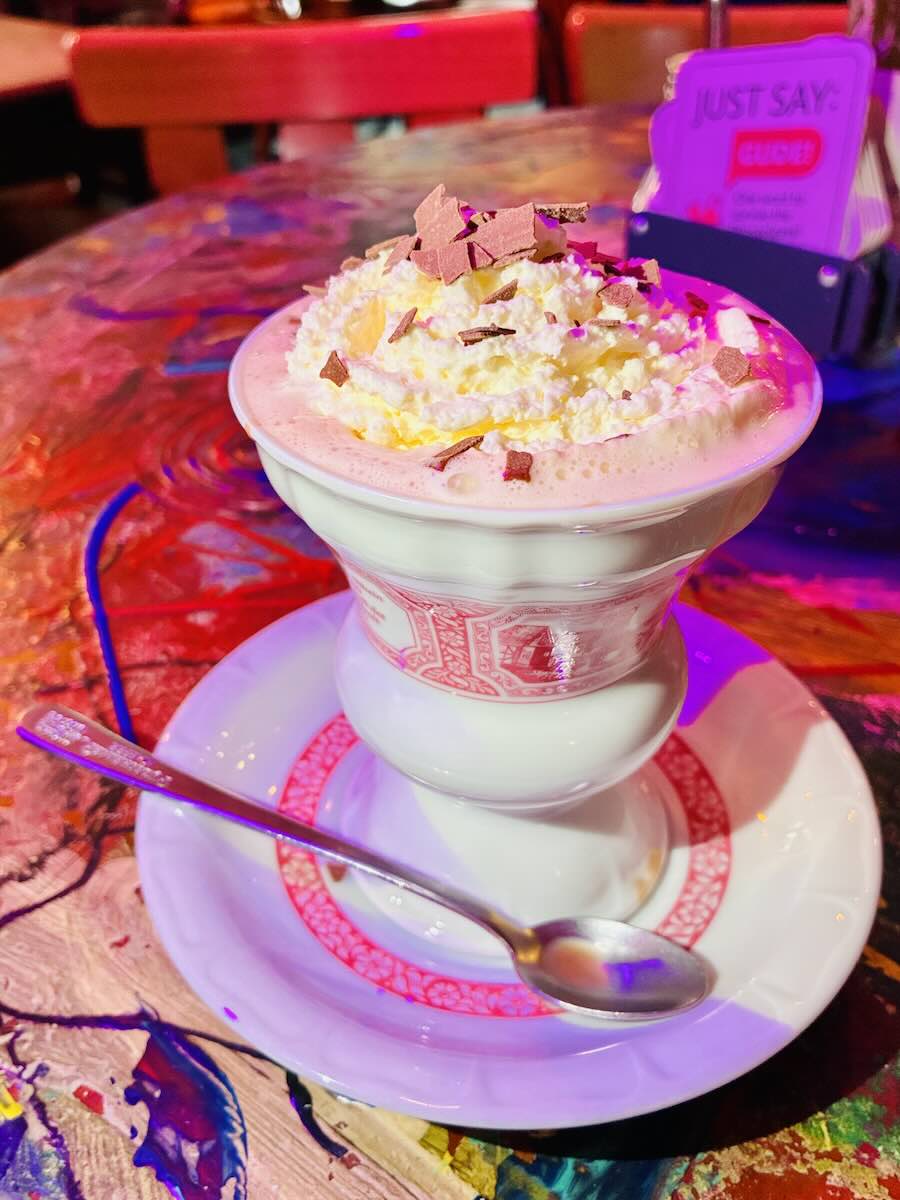
What did we personally spend? Over the whole two weeks, we only spent about $75 total to try local specialty foods at cafes in town and purchase chocolate to take home.
Are credit cards accepted at ports?
Generally yes, in most shops and restaurants. That said, some smaller towns and market stalls were cash-only.
We’d suggest keeping some euros on hand for smaller purchases, bathroom fees, and any spontaneous stops in less touristy spots. (Plus Hungarian forint, if you want any souvenirs or snacks in Budapest.)
How are onboard charges tracked and paid?
Everything is tracked on a running tab. You give your room number if you order a drink at the bar, for example.
You’ll receive an interim statement in your cabin before the last day – review it, make any final purchases, and settle with reception by 8:30am on departure day.
Major credit and debit cards are accepted. American Express was not accepted on our sailing.
Is river cruising a good fit for independent travelers?
If you’re like us and used to planning your own trips, you might be wondering whether a river cruise will feel too restrictive – that was our question too. The video above is our complete answer.
It depends on how you approach it. There’s real flexibility built into most days if you want it.
The ship gives you a base, a bed, and free meals. What you do with your time is largely up to you.
We found it worked well as a way to preview destinations we might want to come back to on our own terms – and as a break from the planning and logistics of fully DIY travel. It felt quite easy!
That said, the tools that make independent travel feel manageable – knowing how to navigate with maps offline, staying connected without burning through roaming charges, finding the right spots quickly in an unfamiliar place – those skills matter just as much on a river cruise as they do anywhere else.
If you want to feel confident using your free time at each port well, the Intentional Travelers Toolkit Membership is where we’ve put together everything we’ve learned for exactly that kind of traveler.
Get our free port-by-port cruise guide
Throughout the 15-day sailing, we kept detailed notes at every stop: the actual docking locations, timings of tours and meals, WiFi speed test data from the ship and from port, etc.
We’ve packaged all of that into a free downloadable guide – along with a Google Map list where you can see relevant locations at each port along the route.
👉 Access our free Emerald Budapest to Amsterdam port guide + Google Map