Culinary Backstreets Bangkok Food Tour Review
I travel so I can eat, so I can learn.
If you’re like me, you probably LOVE food tours when traveling to other countries. Especially to places where you don’t know a lot about the history, culture, and cuisine.
So before spending time in Bangkok, we connected with Culinary Backstreets to do one of their walking food tours. Here’s a review of that experience, what to expect, and whether or not we’d recommend booking your own food tour for your next trip.
Table of Contents
Quick Bangkok Tour Highlights
- Meeting point: Just outside the Sam Yot MRT Station Stop
- Start time: 9:00am
- End point: The Old Siam Plaza (3 minute walk to the original meeting point)
- Duration: 5+ hours (it depends on your group size/how busy stops are, etc…)
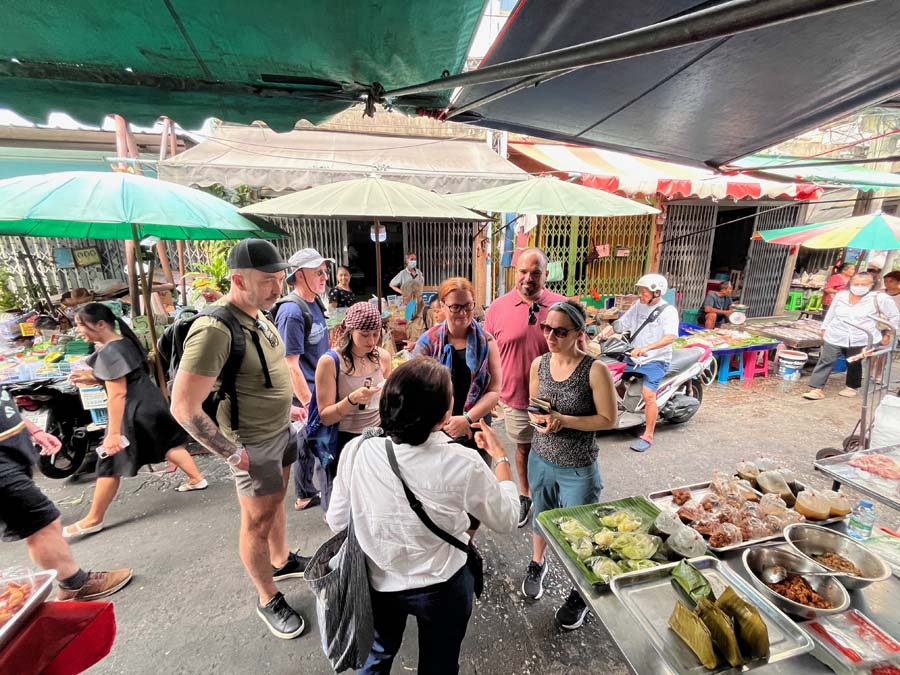
- Group size: 2-8 people (we had 6 in our group including us)
- Walking: Flat terrain, few stairs, mostly shaded. Similar to most SE Asian destinations, there might be uneven pavement or lack of sidewalks. As a walking tour, we don’t recommend it for anyone with significant mobility limitations.
- Food: 9-12 eating stops, from street food to restaurants
- Who it’s for: Foodies and travelers that enjoy learning via local cuisine and story telling. If you like understanding why a city eats the way it eats, you’ll love this.
About Culinary Backstreets
This organization started in Istanbul, which is where we did our second food tour with Culinary Backstreets. We’ve also enjoyed their tours in Lisbon and Porto.
Culinary Backstreets promotes and protects traditional culinary culture, highlighting masters of their craft and family-run establishments through walking tours, downloadable Eatineraries, and written articles. Founded by journalists, they are passionate about telling the stories behind a city’s foodways.
You’ll also find them in popular foodie destinations like Athens, Barcelona, Naples, Tbilisi, Queens, Mexico City, Rio, Tokyo, and Shanghai.
“We use food as a lens through which we explore urban issues, highlighting lesser-told stories and people, revealing a deeper side of the city. I think you’ll really enjoy what we have created.”
– Ansel Mullins, Co-Founder of Culinary Backstreets
> Use discount code INTLTRVL for 5% off any Culinary Backstreets tour! <<
We joined Backstreet Bangkok: Exploring the Cradle of Thai Cooking in exchange for an honest review here on the blog. (As always, the opinions expressed in our reviews are entirely our own.)
Culinary Backstreets Bangkok Food Tour
If you’ve eaten Thai food at home, you might think you know what to expect in Bangkok. But one of the themes of this tour is that “Thai food” isn’t one simple thing.
It’s a tapestry of influences from different regions of Thailand and beyond.
And according to Culinary Backstreets, the best place to start unraveling those threads is Ko Ratanakosin, the historic core of Bangkok where the city (and much of its cooking culture) was born.
Pro tip: Check the availability schedule because tours can be offered on different days and times, and spots are limited due to the small group size.
As with other Culinary Backstreets tours we’ve done, you can expect a long, story-rich experience with lots of bites.
Don’t let the word “bites” fool you. There is plenty to eat along the way.
We walked about 2.5 miles total, broken up with lots of stops.
The tour is very thoughtful and understanding the needs of visitors. The pace was nice and we never felt rushed. We never walked too long and had shade and AC to keep us from overheating in Bangkok’s hot climate.
Food: The all-inclusive price covers almost a dozen edible specialties. There are typically 9-12 eating stops, and the guide will suggest portion sizes as you go.
We actually tried 16 total items, including street food, a couple of noodle, and a stop at a restaurant. This is one of those tours where you should definitely come hungry and curious.
Dietary notes: Culinary Backstreets says this tour can accommodate gluten-free and dairy-free diets, but has limited options for vegans and vegetarians. Pork is served but can often be substituted.
Please advocate for yourself and your needs early in the tour so you can have the best possible experience. We shared with the guide that we don’t do well with spicy food, and she tried her best to accomodate that or warn us.
As a couple, we also shared dishes at a couple of stops, which was perfect. There is more than enough food and we didn’t want anything to go to waste. Don’t hesitate to let your guide know if you’re willing to share.
Alcohol is not served as part of this experience.
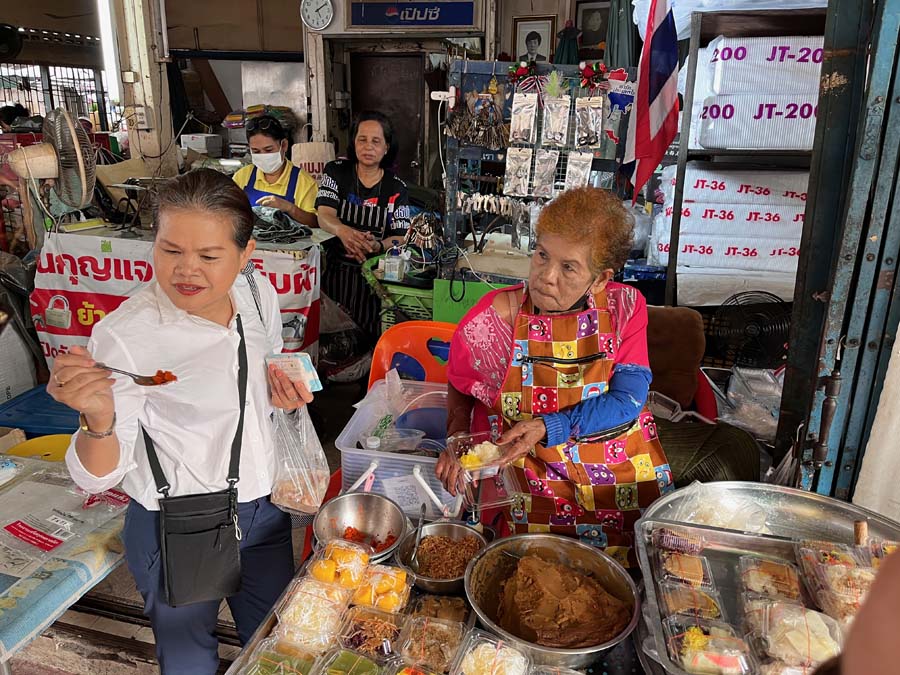
What we loved
You know you’re on a great food tour when your guide wants to share things you might not know or wouldn’t have tried on your own. That was our experience with this Culinary Backstreets Bangkok Food Tour.
We loved that our guide, Annie, helped us explore an area that was very much a “locals” spot. One of those areas that can feel intimidating with lack of English menus and food that is unrecognizable. Several stops included hidden areas that we wouldn’t have known existed from just walking along the street.
During our walking journey, we also learned some important history about Thailand as a country, Bangkok as a city, and the incredibly diverse group of people that make up the area – and the culinary history – that brought us to today.
Annie was very open to our questions, food related or not. She was genuinely happy to helps us learn.
And the food. Some items will probably seem and taste familiar. Others, we might otherise have thought, “I have no idea what that is so I’m going to pass”.
One of the best parts about this food tour was having great recommendations but also a trustworthy local person to ask about what we were eating. I don’t care how good AI will be in the future, I’d much rather have an IRL experience with a local person.
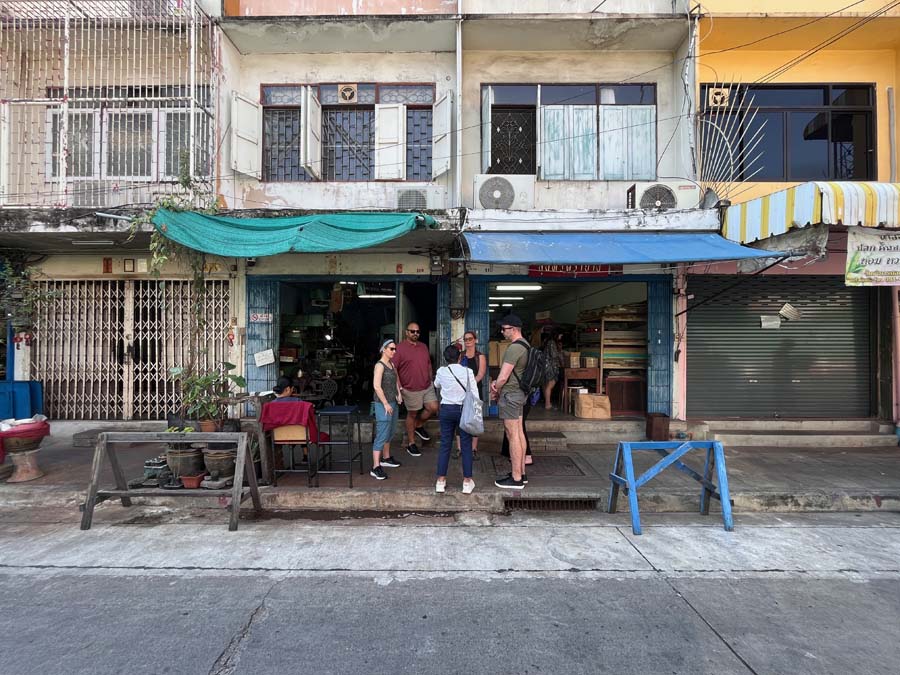
Pro tips for food tours
- Try not to eat much ahead of the tour (if at all): You will eat plenty. This can easily cover most of your day’s food needs.
- Pace yourself: If you go too hard early (especially eating rice or other side starches), you’ll be full before the best surprises at the end.
- Communicate with your guide: If something is too spicy, you can’t eat pork, or you’re hitting a wall, say so. If you’re traveling with a companion, consider sharing. You can also turn down any stops but please be proactive about this and let your host know before they order. Waste is bad for everyone.
P.S. Use discount code INTLTRVL for 5% off any Culinary Backstreets tour!
Next we’ll share a bit about some of the stops we made and the great food we got to sample…
Our Bangkok Food Tour Stops
One of the things Culinary Backstreets does well is make the city make sense through food. Instead of just bouncing from snack to snack, the stops are connected by a storyline.
This tour focuses on Rattanakosin Island, Bangkok’s oldest neighborhood. Along the way, the route is designed to highlight how Thai cuisine was shaped by multiple communities, migration, trade, religion, and regional influence.
Here’s how our day flowed. (We’ll keep it high-level so we don’t spoil every surprise.)
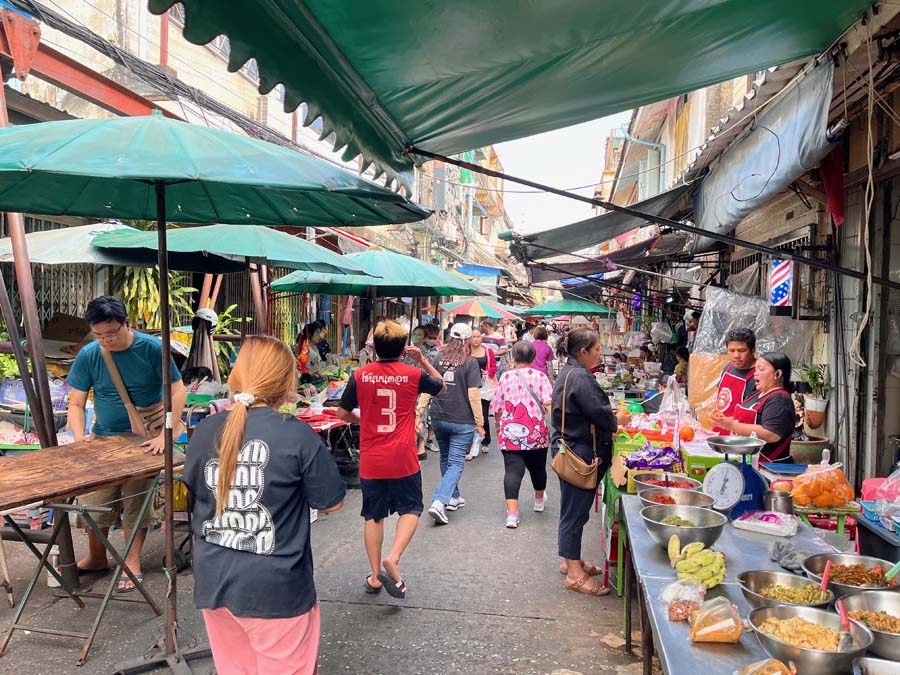
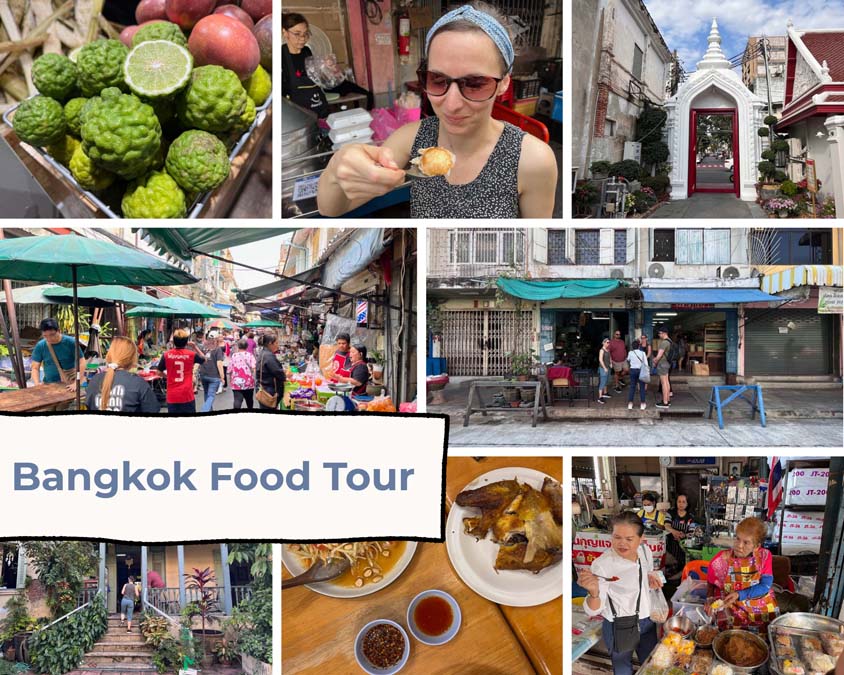
The first part of the tour was a stop at a fresh market that feels like a “micro-Bangkok”. Vendors in this local market represented multiple communities, including Thai, northeastern Thai, Muslim-Thai, and Chinese-Thai.
While there are many wet markets throughout Bangkok, this one exists for residents of Bangkok – not tourists.
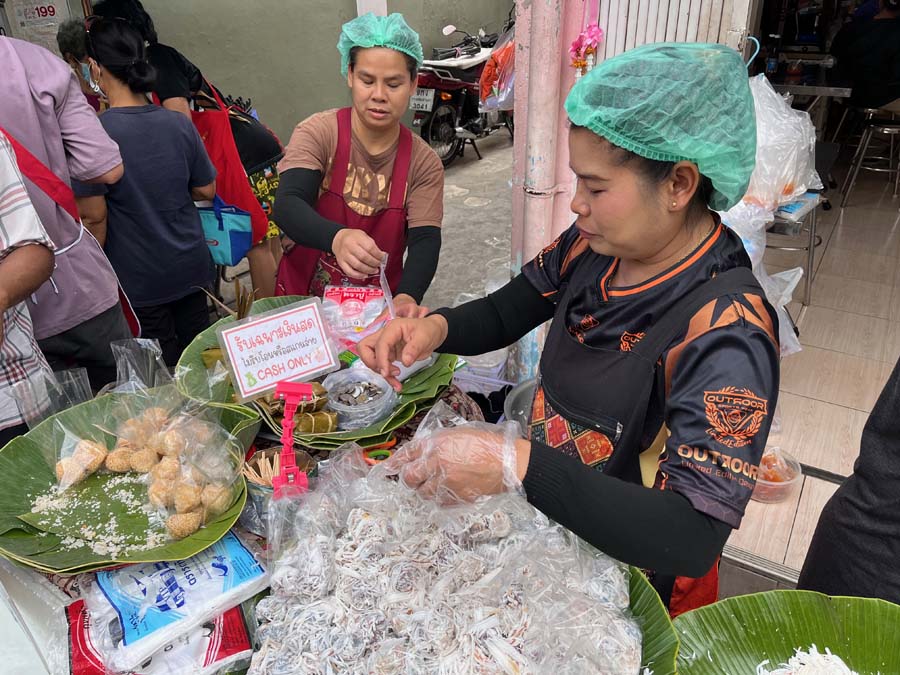
Right away we were reminded that “Thai food” is not a single lane. It’s many lanes running alongside each other.
We tried several coconut-influenced snacks, soft round pancakes (like Japanese Takoyaki), sticky rice with lots of topping, and we also visited a traditional coconut milk maker.
In just three quick stops it was clear why coconut milk in Bangkok cooking tastes and behaves the way it does.
The reminder that Thai food represents a wide range of cultures and people came up in a Roti stop with a savory and sweet option. Roti is light, fluffy and delicious. A better version of a doughnut IMO.
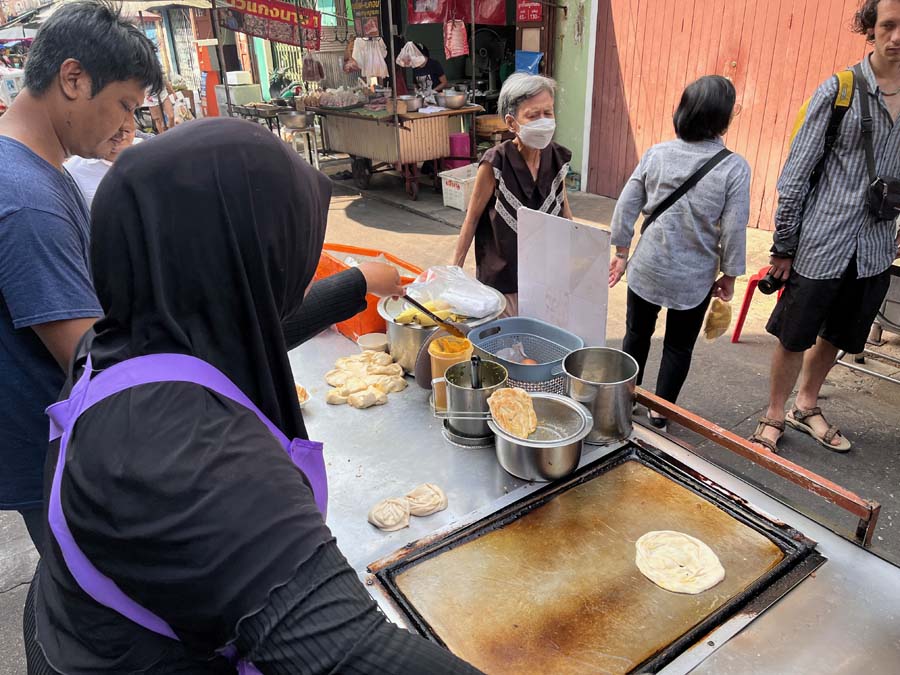
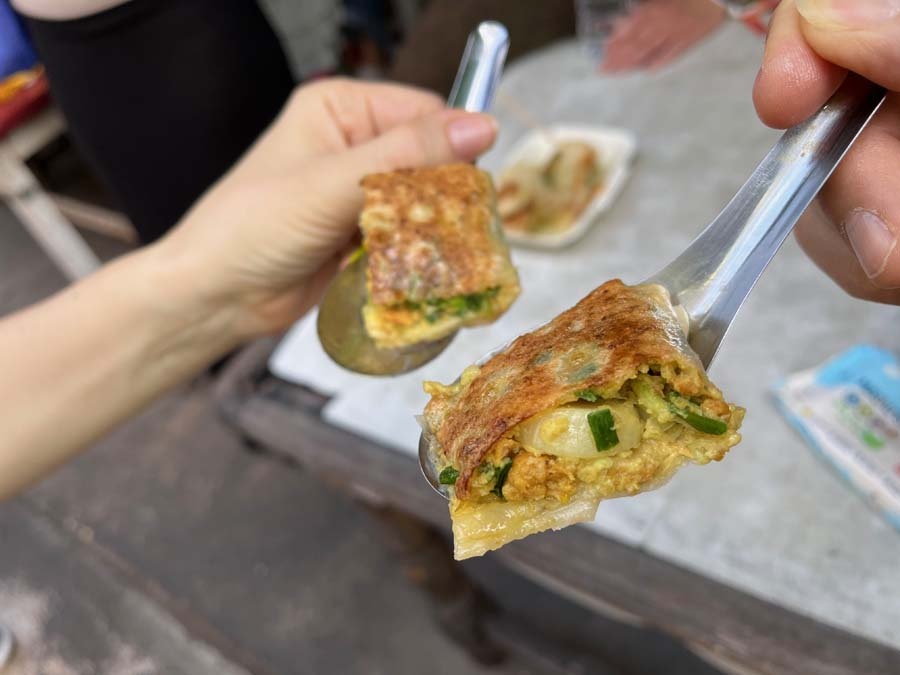
From the market, we moved through a neighborhood known for making Buddha statues before paying respect at a Chinese shrine. This was one of those stretches where the “walking” part of the tour really matters, because the context is the point.
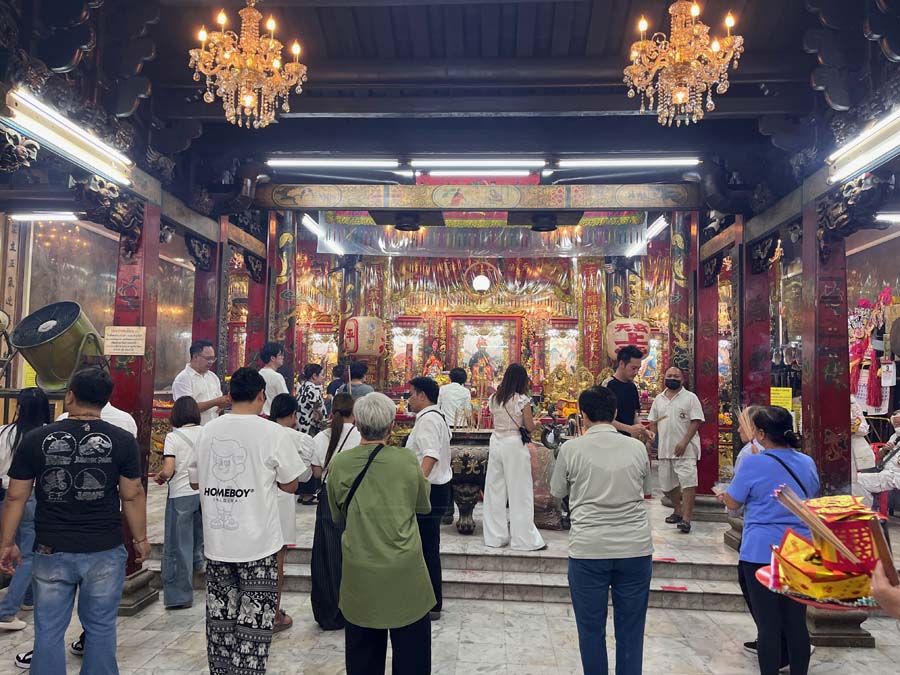
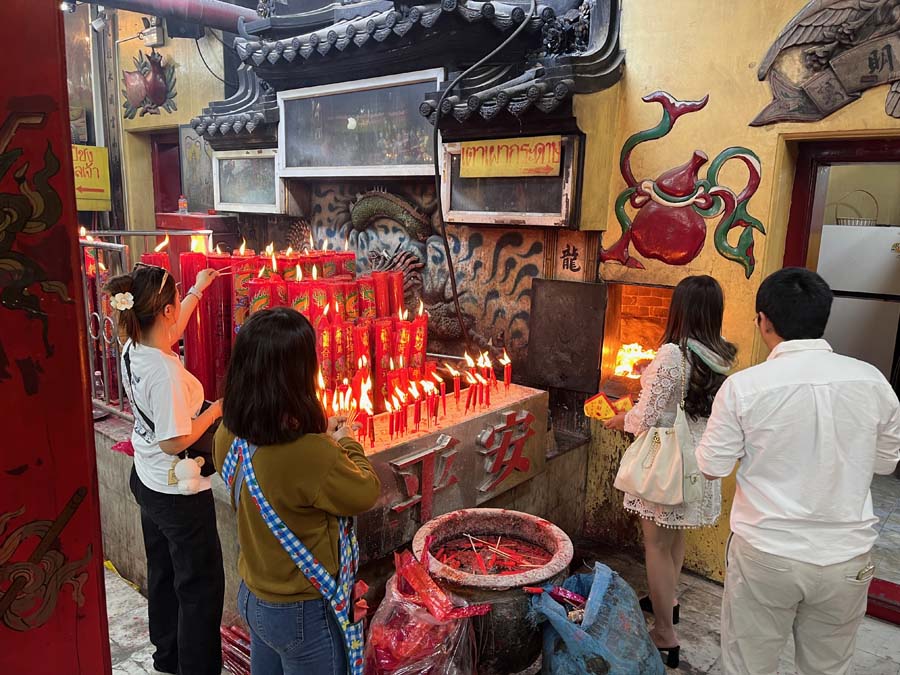
Next, we dove into the cuisines of the Chinese diaspora, which is one of the biggest influences on Thai cuisine. We ate at decades-old shophouse restaurants and tried Michelin-recognized noodle shop.
This was one of our favorite parts because we could tell this was a very popular destination with a massive staff, and a restaurant that kept getting bigger the further inside we went. We got to choose from their noodle menu.
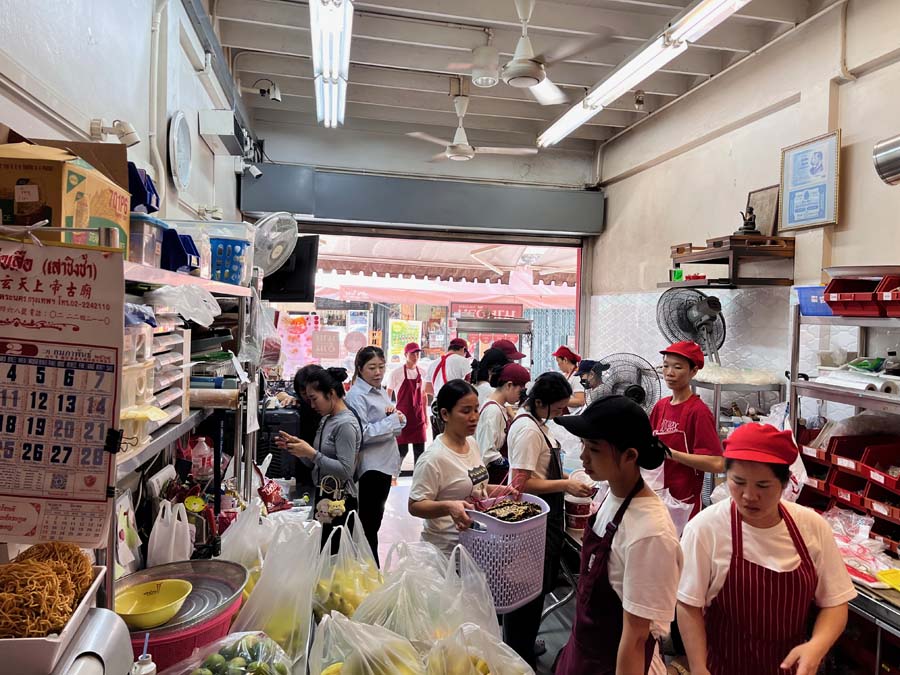
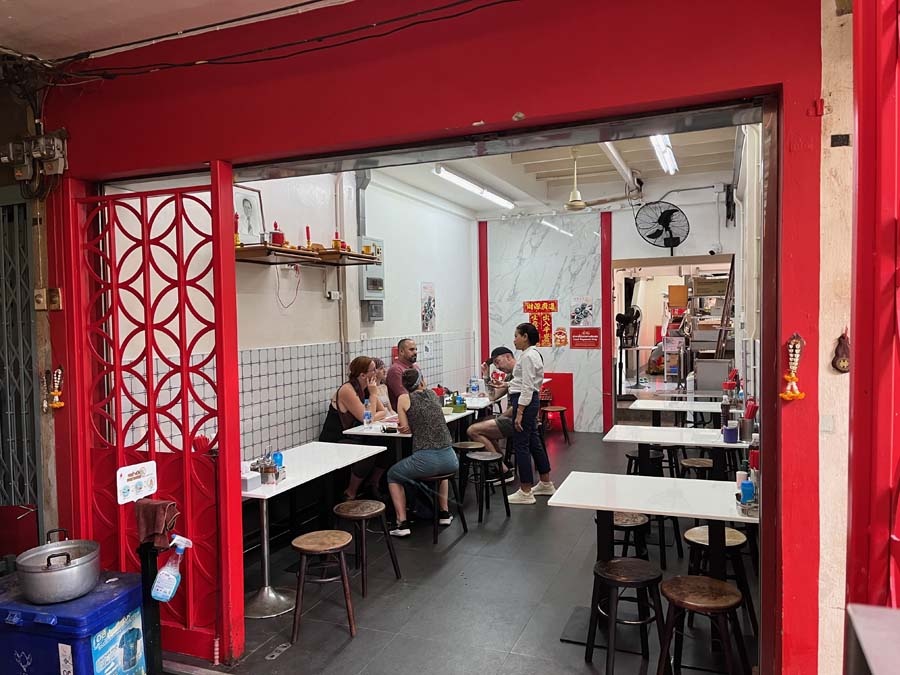
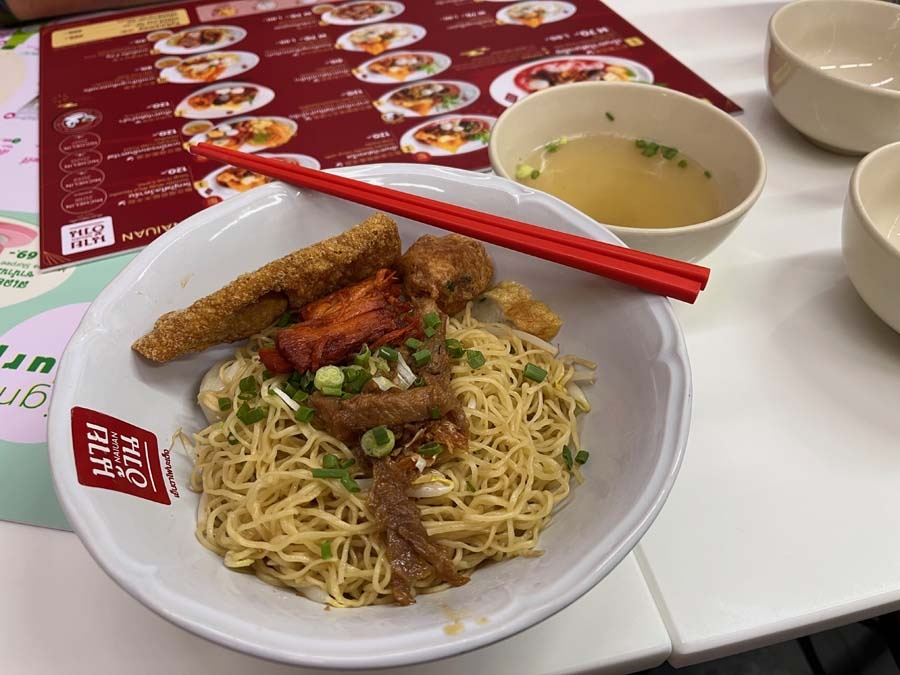
At this point we walked around the neighborhood a little more and stopped for our choice of coffee or Thai tea.
We liked that there was a good mix of being able to order our own choices and at other stops, the guide chooses the dishes.
Immigration from Thailand’s northeast has brought a different culinary influence to Bangkok, and at our next stop, we tasted two of the region’s most famous imports: spicy papaya salad and sticky rice. We also tried a corn salad, roasted chicken, and an unexplainable fried catfish dish. All of this at a decades-old, lauded restaurant with pictures of Thai (and foreign) celebrities on the walls. 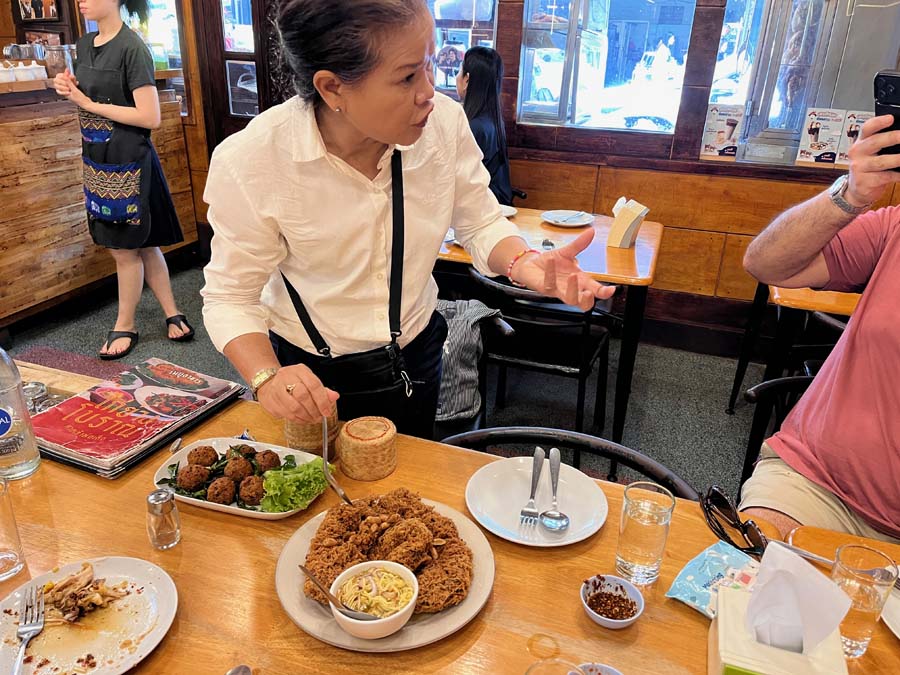
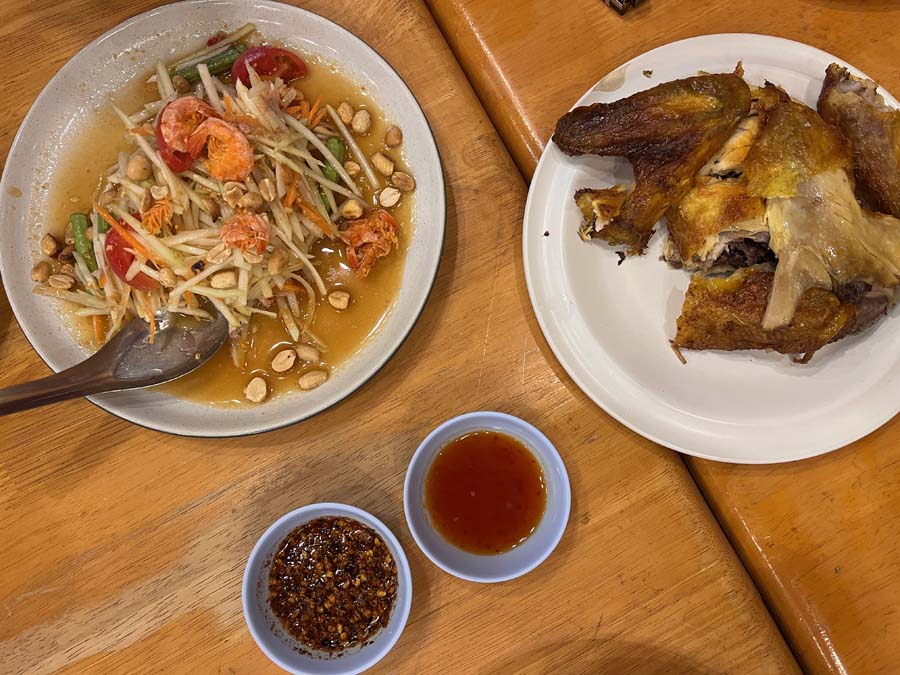
Personally, we do not handle spicy food well and this was the spiciest stop of the tour, specifically the salads and sauces.
But there was still plenty to eat and we still sampled it all because that’s what the experience is all about, trying and learning. We still had plenty to eat, and the tour wasn’t even done.
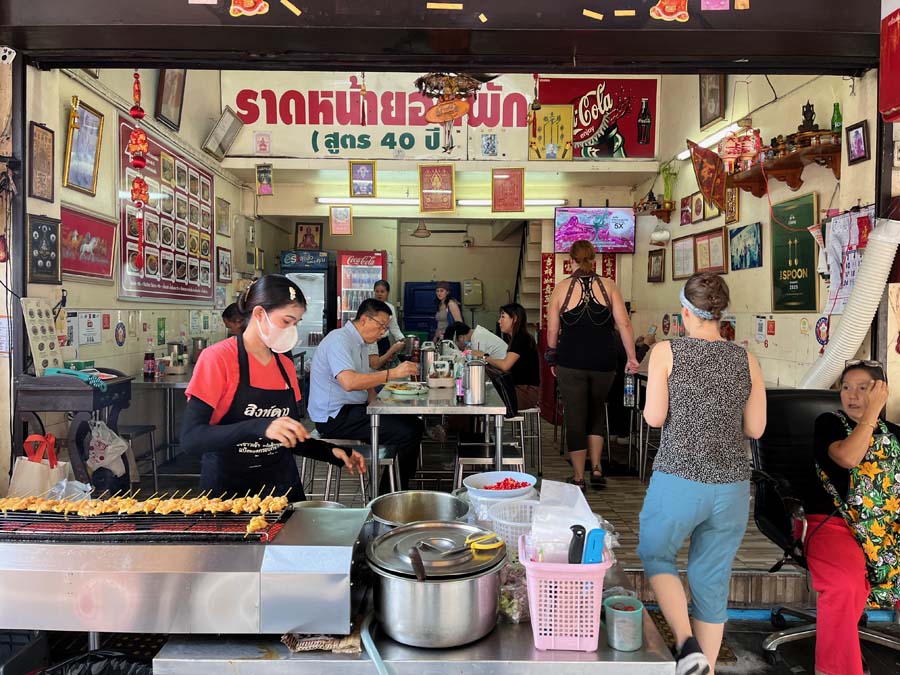
The next noodle dish stop was for Pad See Ew. We really liked the intention here for this stop. Insted of Thailand’s most known noodle dish, Phad Thai, they shared one that’s less common.
Pad See Ew (wide rice noodles) is one of our favorites and so it was great to try a local recommendation, which we ordered with seafood.
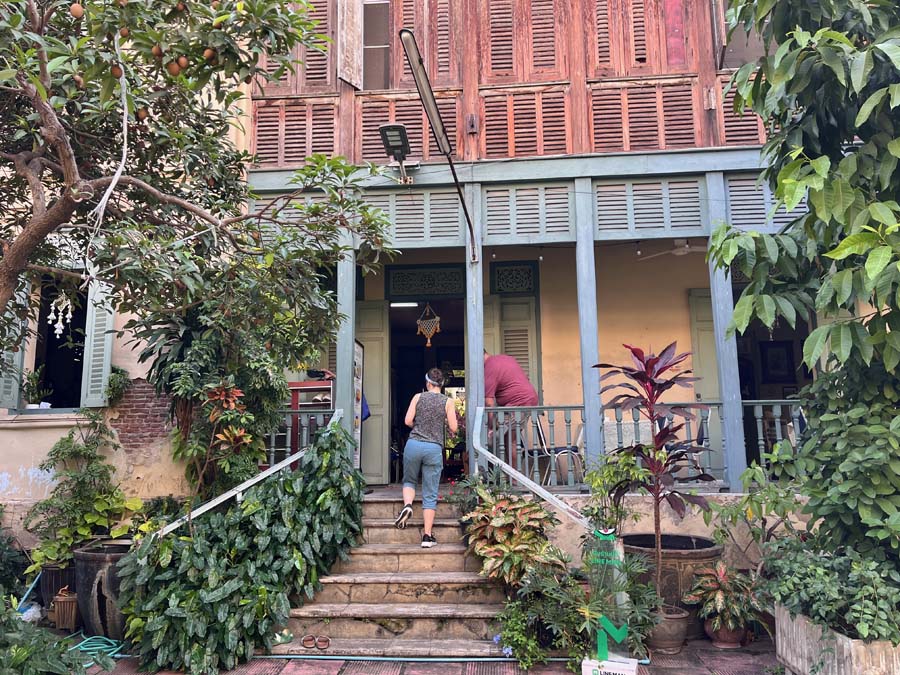
As we started to near the end of our tour we sat down at a nearly 150-year-old former mansion that doubles as a restaurant. This stop focused on classic Bangkok/Central Thai dishes that have largely disappeared from the city.
It was if we traveled back in time to a different area and into some one’s house. This was also a great opportunity to learn a little more about Thailand’s monarchy through images on the wall, which is a common tradition in Thai homes.
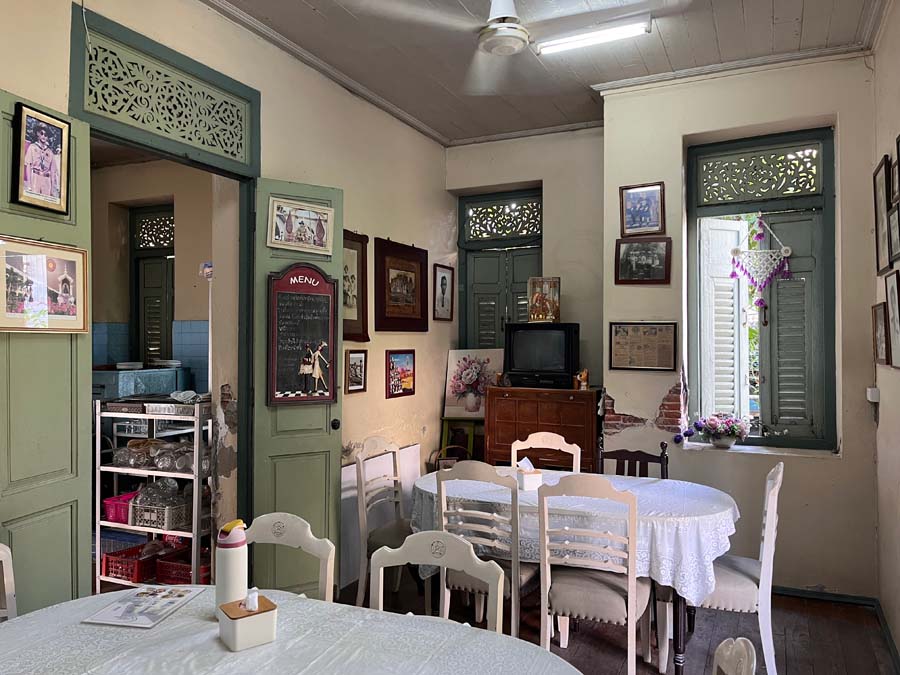
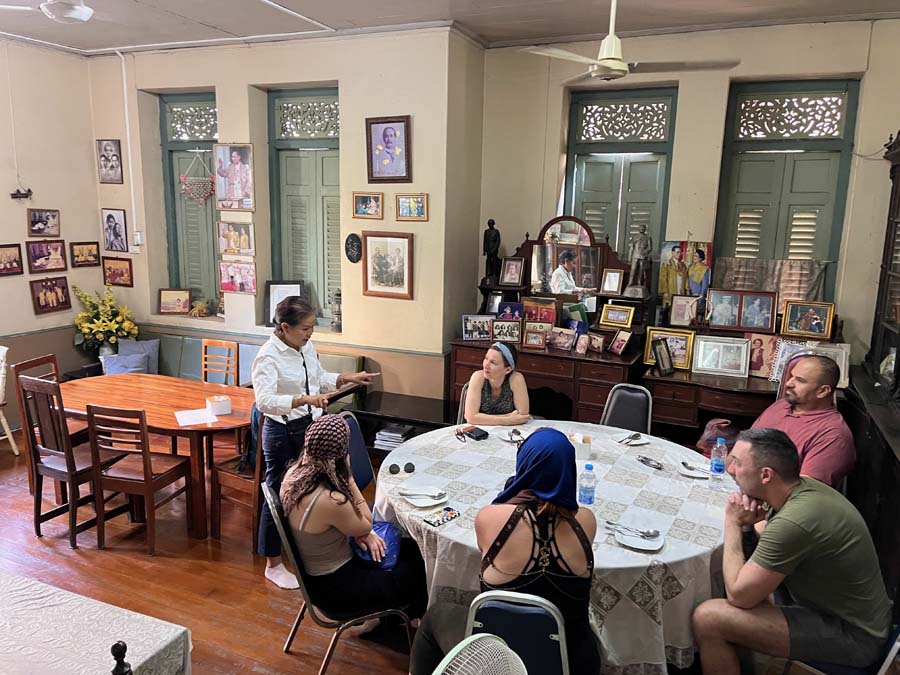
As a group, we opted to share desserts, trying a bowl of plum mango (a fruit we had seen often in markets but hadn’t tried) and a banana dessert. Both were light and delightful.
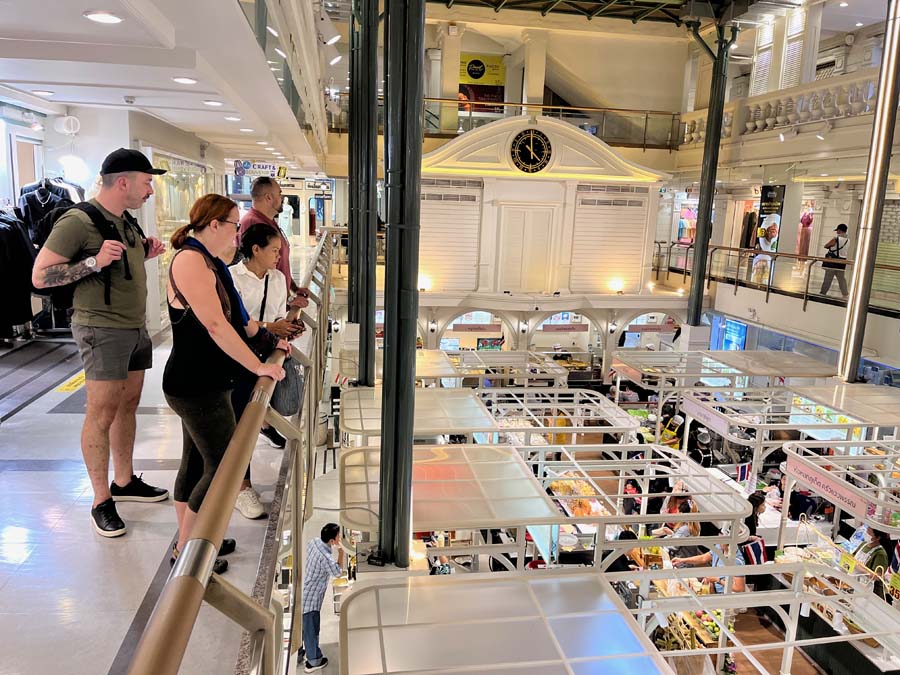
For the final part of the tour we walked to the Old Siam Plaza, which is kind of like an upscale indoor market.
We got to see lots of examples of clothing inspired by various ethnic groups and there is a bustling food court at the bottom which, if you’re game for, your guide might offer you one or two more bites to finish off the experience.
Final Thoughts About The Bangkok Food Tour
By the end, Culinary Backstreets’ claim feels pretty accurate: you may never look at your Thai take-out place back home the same way again.
We got an opportunity to eat delicious things, but also get a glimpse into history and culture, that brought us to the dishes we were eating.
We really enjoyed the area they picked for this tour, and the intent was clear. Learn about Thai food from our people and where they came from. It was an excellent experience and we learned things about Bangkok and Thai cuisine that we wouldn’t have discovered on our own.
A few things to know going in:
1. This is not a “top sights of Bangkok” tour. It’s a food-and-culture tour in a very specific historic area.
If you want temples and major tourist landmarks, plan extra time for that separately. The value here is the context.
Bangkok has endless amazing food, but understanding why it’s amazing is a different layer.
2. One thing that surprised us was how far over the scheduled time we went. The website indicated that we’d be done around 2pm, but we didn’t wrap up until around 4pm – making the tour a full 7 hours.
3. Bangkok is a busy city, which means lots of background noise from traffic outside and even the kitchens indoors.
If you have trouble hearing in general, the combo of noise plus Thai accents can make it tricky to fully understand what’s being said – but that’s the case for any tour in Bangkok. Don’t let it dissuade you, just be aware going into it.
4. Another reminder: Portioning matters on tours like this. You should absolutely pace yourself so that you’ll be able to try everything through to the end.
Would we recommend it? Absolutely. This is a perfect experience for someone wanting to get a glimpse of an area of Bangkok as if a local friend is showing you around. You’ll find a balance of familiar but also unfamiliar, leaving you feeling like you learned something new.
And of course, you’ll leave full and satisfied from the delicious things you tried, empowered to get those items again or inspired to try another experience like this. And that is a good sign of a great food tour!
>> Use discount code INTLTRVL for 5% off any Culinary Backstreets tour! <<
Read next:
Culinary Backstreets Lisbon Food Tour Review
Is the Bangkok GoCity Pass worth it? Review and Best Uses
Things We Would (and Wouldn’t) Do Again in Chiang Mai, Thailand
Thailand travel restrictions: What travelers need to know
Tips for Travel in Bangkok