
Why It Can Be Better To Get Medical Treatment and Healthcare Abroad
Traveling long-term has taught us that healthcare abroad doesn’t have to be intimidating. In fact, it can be affordable, high-quality, and sometimes even better than what we experienced at home.
In this post, we share real experiences, practical strategies, and lessons learned for planning preventive care and medical treatment while living or traveling internationally.
This is a collaborative post with our friends and fellow nomads, Dorene and Troy of Travel Life Experiences. In this post, we share our experiences and tips about receiving medical treatment and healthcare abroad – prices listed may have increased since the time of our visits.
Updated: February 2026. Originally published: 2019.
Table of Contents
Our experiences with healthcare abroad
To kick us off, the following is a video where Jedd and I discuss our preventive healthcare experiences and highlight three different hospitals in Bangkok:
Several of our nomadic friends, including Troy and Dorene, have had their share of medical emergencies while traveling over the years.
As full-time travelers, we’ve all needed to plan for regular health visits such as medical checkups, dental visits, and annual eye exams as preventive measures.
Since typical travel medical insurance covers emergencies and not regular health maintenance, we’re often paying out of pocket for preventive healthcare.
Here’s what we learned during our various medical visits around the world:
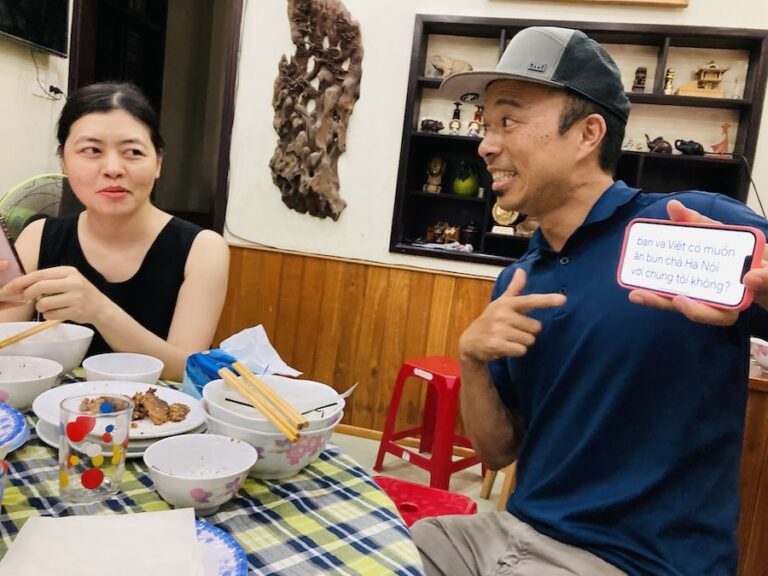
1. You can find ways to communicate to medical staff, even though you can’t speak their language.
From Indonesia to Panama to Vietnam, we’ve received good quality care at reasonable prices from international hospitals and clinics.
Often it’s possible to find English-speaking doctors. Otherwise, the language barrier can be a challenge, to find the right terminology.
But here are a few ways to overcome this difficulty:
A) Document your symptoms on paper in advance. Look up your symptoms on Google Translate or through a Language Dictionary and write them down.
Even if you can’t pronounce them correctly, you have the written spelling as back up. You don’t need to have complete sentences to communicate. Sometimes, just a few words are enough to get you through.
Also, Google Translate has such excellent tools to communicate your message in text or audio if you have Wi-Fi or data access.
Tip: Having reliable mobile data makes translation and pharmacy communication easier – If you’re a Toolkit member, check out our Smartphone Savvy Travel or WorldWide Connectivity courses for step-by-step guidance to communicate confidently.
B) Ask for someone in the clinic who can speak a little English. Sometimes just a short facilitation in English can help with communication.
It’s surprising how common it is to find someone who knows at least a little English, even when you don’t expect it. But this isn’t something you can always rely on.
Moreover, there is medical terminology that is also consistent in English and other languages. For example, Dorene discovered that Vertigo, a problem she has with dizziness and ear infections, is the same word in Spanish.
C) In some countries, it’s common for doctors to study in the United States or Europe, and then they return home to practice. So perhaps there is a little English in his/her vocabulary to bridge communication gaps. We met many travelers who mentioned the same experience with such doctors, and you may just get lucky.
Of course, language barriers are challenging and frustrating, but when your health is on the line, it’s worth making an effort. (And often this makes for an excellent travel story.)
D) Use Body Language. If you feel pain, simply pointing to that part of your body that is suffering is already invaluable.
For example, in Panama, Dorene was able to show how she felt dizzy and that her head was spinning, or when she injured a knee in Indonesia, she simply pointed out where the pain was isolated.
2. Quality and cost of healthcare can be better than home.
This seems surprising, but many (even developing) countries have even better quality healthcare (quality + price) than what you may have back home.
It’s important to note that it may not always be public health care, but private health care facilities that can provide a significant increase in quality at still a lower cost than the same services in your home country.
According to World Health Organization’s (WHO) rankings of the best healthcare in the world in 2020: Canada rated 30 in the world, and the United States rated 37.
Countries like Colombia, where Troy and Dorene visit frequently, is ranked 22.
According to Numbeo’s user-reported data, Taiwan, South Korea, Netherlands, Japan, Austria, and Ecuador are currently at the top for healthcare quality.
Examples of excellent quality medical service that we received on our travels:
A) Dental Treatment Abroad
Troy and Dorene completed a dental cleaning in Panama. It was a complete cleaning service, including fluoride treatments and a full dental check-up in a very modern office that you would expect in Canada or the United States.
The service cost us only $50 USD. The dental forms were only in Spanish. However, they used the Google Translate app on our phone through the camera reading option to translate and complete the forms.
The dentist was educated in the United States, so communication was easy.
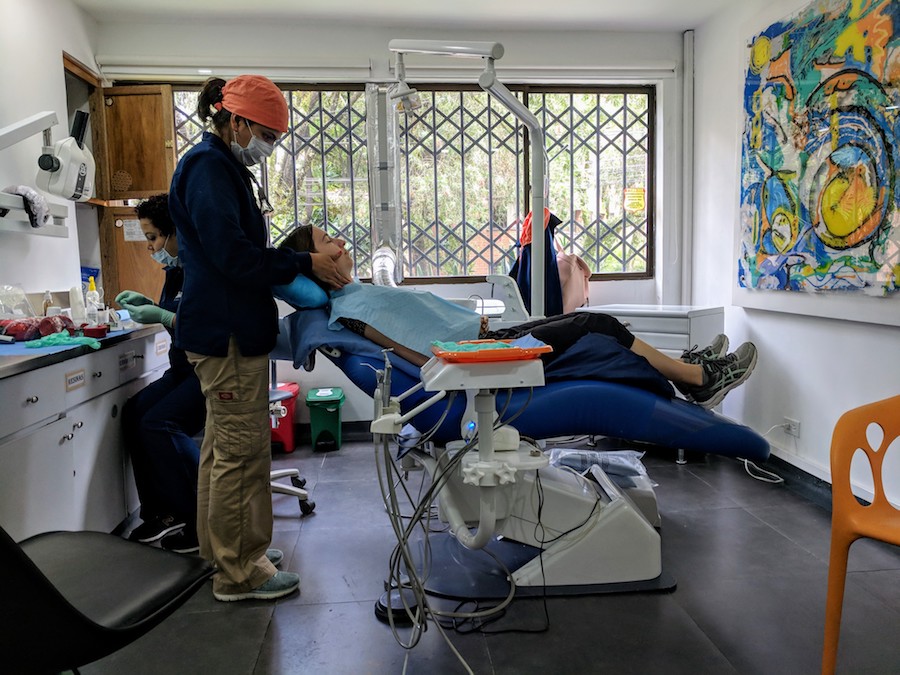
We (Jedd and Michelle) had similar experiences in Medellin, Colombia, with a dentist who caters to expat English speakers and was trained in the States.
She did the full cleaning herself with relaxing music, aromatherapy, and even a little facial massage!
The waiting room was a beautiful open-air garden – very lux.
The initial visit and cleaning was about $60 US, and the dentist set us up with a clinic nearby to get x-rays, which was done in Spanish.
She also created a night guard bite splint for Michelle’s TMJ for about $75 US, a fraction of the cost in the States.
Jedd and Michelle have also done dental cleanings several times in Thailand and different parts of Vietnam.
Our favorite was getting dental work done in Penang, Malaysia.
Again, the English-speaking dentists did all the work themselves. The clinics were pristine and the procedures were gentle and quick. Cleanings were less than $30 US.
Jedd got a filling replaced on his front tooth (it was chipped years ago and the filling started to yellow) and they were able to replace it on the spot for 150RM (about $3 US).
The experience was top notch, and definitely worth visiting George Town, Penang just for the dentist.
B) Medical Clinics Overseas
Early on, Troy and Dorene visited clinics in Indonesia and Panama for various ailments. They received advice from travelers and expats where the best clinics could be found.
The clinics and hospitals were clean and looked very similar to those at home. They paid $20 US for treatment in Panama and $50 US in Indonesia.
The doctors were English speaking, and even despite their accents, the medical terms they used were similar to English. Troy and Dorene were relieved and surprised at how their visit to the clinic was easier than expected.
While in Cuenca, Ecuador, a fellow traveler recommended a great local dermatologist to us. Since I (Michelle) needed to get moles checked regularly for potential melanoma, I decided to give the doctor a try.
Appointments were not necessary. When I arrived to the clinic, I was able to walk in after a 5 minute wait. The dermatologist had more advanced screening technology than anyone I had encountered in the States, and he spoke English.
The process was quick and professional, and the charge was about $30 US. I went back a few years later to the same clinic (different doctor) and had a similar experience.
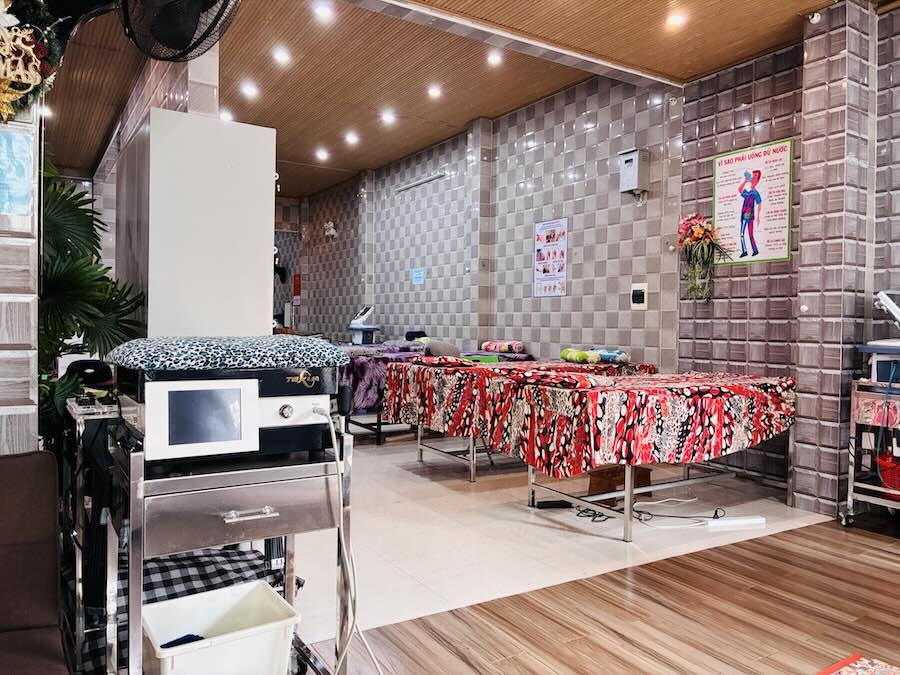
In Vietnam, I (Michelle) have used a local chiropractor several times. It’s first come, first serve with a flat fee under $15 for each visit. After evaluation, manipulation, and massage from the chiropractor for 20-30 minutes, I get another 30 minutes of various ultrasound or electrical muscle stimulation machines.
C) Lab Tests Abroad
Given that we are traveling full time, we sometimes seek our routine check ups while abroad.
Troy and Dorene did this first in Panama. They visited a doctor and went to the lab to run tests.
They were surprised the lab was a state-of-the-art facility that could rival any in the western world.
Additionally, the doctor scheduled a free results discussion with each of them. In fact, the test results were emailed to them by the clinic within 3 hours of their visit. They paid $100 for this service.
When traveling through Malaysia, we (Jedd and Michelle) found that there were extremely affordable, top quality hospitals offering full health checks. For about $112 US each, we got 66 lab tests, ultrasound, x-ray, EKG, and consultation with a doctor at a local public hospital.
Other add-on options, like body composition test and cancer screenings, were also available.
The local nurses were very friendly and all spoke some level of English.
The process took half the first half of the day, and then we returned in the afternoon to meet with the doctor to discuss the results. A hard copy and electronic file of the results were also provided.
We did similar but more in-depth health checks at one of the fanciest health screening centers in Bangkok, Bumrungrad Hospital (see video above). The facilities and efficiency are excellent, with visitors coming from all over the world to get care. As a result, the price is a bit steeper.
This type of extensive testing and preventative screenings is something rarely offered in North America – and when it is, it’s much more expensive.
D) New Glasses and Eye Examinations
In Hoi An, Vietnam, I (Michelle) wanted to see if the glasses I used for computer work needed a new prescription.
Walking into a local eye glass shop, they were able to do some initial testing in a few minutes and determined that the current prescription was still the best fit. This was free of charge.
In Chiang Mai, Thailand I booked an appointment online at an eyewear store that does vision testing. The exam was more thorough, testing for overall eye health as well as prescription needs. The cost was about $12, and I used my new prescription to order glasses online for home.
Troy received a full eye exam and updated the lenses for his glasses in Panama. With his basic Spanish, he was able to confirm his needs. Eye readings are universal, so this was easier than anticipated.
Troy paid $90 U.S. for updated lenses, which was probably on the high end for the area.
E) Drug prescriptions in other countries
In several countries, pharmacists can administer drugs without a prescription. Taking the same Google translate tactics, it was possible to get help for various ailments despite the language barrier.
Troy and Dorene have used this tactic in Colombia, Vietnam, Indonesia, and Thailand.
It may also be quite shocking how low the cost of medicine is in other countries.
To find your current prescriptions, this is a little trickier.
Often drugs have different brand names but are copied from the original product (generic brands). Dorene encountered this situation in Vietnam. She was given medications she wasn’t familiar with.
So she researched online to discover more details about the product, the dosage, and other information. Dorene was able to confirm that the prescription was appropriate. This extra research gave her peace of mind.
How to find reputable hospitals and doctors abroad
Not all clinics and hospitals are equal, even within the same destination. So how do you find out what’s best and decide where to go?
1. Get tips from fellow travelers and expat communities
You can search in destination-specific Facebook groups or other online forums to see what clinics fellow travelers have actually used. This is how I’ve identified several of the specialists we’ve visited.
Sites like TripAdvisor and Reddit often have threads about healthcare. You can sort reviews by recent dates and check for mentions of the facilities, whether English is spoken, and pricing.
If you don’t find existing advice on a forum, simply create your own post to ask. Just be clear about what you’re looking for, as “best place” can mean different things to different people.
2. Search official hospital rankings and global lists
Check for places on Newsweek’s best hospital list to identify internationally recognized facilities.
Country-level health system rankings, the Numbeo Health Care Index can give you a broad sense of healthcare quality where you’re headed.
3. Check YouTube and blog walkthroughs
I’ve seen quite a few videos and blog posts by other travelers showing their actual visits to hospitals and clinics. This can give you a sense of what it’s like and is another way to get recommendations from a real person.
Notes about traveling after surgery
Medical tourism, where someone goes abroad specifically to have a surgery or medical procedure done, is often more affordable and comfortable than having this work done in North America.
As nomads, we have yet to need any major surgery. But we know several expats who chose to do their hip replacements and recovery in Ecuador.
If you do find yourself having surgery overseas, whether planned or as an emergency, here are some things to know.
The following tips were contributed by Amanda Wilson.
Your ability to fly will be affected if you’ve recently had surgery – especially bowel, chest or brain surgery.
For most procedures, you should be waiting between two and six weeks post-op before flying. For heart or chest surgery, you won’t be able to fly for at least eight to ten weeks.
But even once you’ve got medical clearance, you could still experience problems traveling.
To reduce the risks, here are tips for traveling after surgery:
1. Avoid blood clots
To reduce the risks associated with flying for long periods:
- Check in early to guarantee a seat with extra legroom (you may need to pay extra for this privilege)
- Ensure to stretch your legs often and keep blood circulating
- Walk up and down the aisle regularly
- Don’t wear tight clothing
- Avoid drinking alcohol and instead, keep hydrated with water
2. Research your location
Your destination should be convenient, close to amenities and relaxing. You shouldn’t put your body under too much strain after surgery. That means adventure holidays are off the table.
Similarly, avoid anywhere hilly or at high altitude, as well as places with extreme temperatures as they can cause extra strain. Give your body time to relax by booking a peaceful holiday.
3. Research the country’s medical facilities
Look into foreign medical services and find out how you would be treated and what you’d need to do to get medical help in the destinations you’re interested in.
If you’d be interested in having access to healthcare providers vetted by a top authority, you can become a member of The International Association for Medical Assistance to Travelers (IAMAT) for free.
4. Make things easier for yourself
Don’t put yourself under unnecessarily pressure or stress.
For example, give yourself plenty of time to get to the airport, rather than rushing around.
Also, book transport to your accommodation ahead of time. It’s one less thing to worry about.
5. Don’t be afraid to tell people
Let flight attendants know about your recent surgery, and tell hotel staff you might have some additional requests.
Most people will be more than happy to help if you’ve explained the situation to them clearly. Remember – you’re not being demanding, but people can’t be accommodating if you don’t inform them.
For example, you might be able to get help with your luggage or use of a fwheelchair at the airport or hotel.
So, healthcare needs while traveling can’t always be planned, but with a little bit of research, there are many great options for medical and preventive care abroad that can benefit your health.
Have you been surprised by a positive medical or dental experience in a foreign country? We’d love to hear about it.
Like this post? Pin it for later or share with friends!

Travel clinic is very important for vaccination before traveling. A few days ago I visited Travel Clinic NY in Manhattan for vaccination before my Brazil tour. This is one of the best travel clinics in NYC. The cost of their vaccines is so affordable and they advise only necessary shots. Further, the patient only seen by certified travel doctors. You can choose your schedule online by visiting their website.